Not all damp walls are created equal. That patch of peeling paint or musty smell in your home could be more than just mould — it might be rising damp, a hidden problem that slowly damages walls, skirting boards, timber, and floors. Ignoring it can lead to expensive repairs and reduce your property’s value. Early detection saves time, money, and stress. This guide explains how to identify rising damp, how it differs from mould, and practical steps to protect your home.
What is Rising Damp?
Rising damp occurs when moisture from the ground moves upward through bricks, mortar, or other masonry by capillary action. A properly installed damp proof course (DPC) should block this movement, but older homes, damaged DPCs, or landscaping changes can allow moisture to climb into walls. The danger is that rising damp often starts small — a tiny patch of peeling paint or a faint musty odour — but over time it can cause plaster to crumble, timber to rot, skirting boards to swell, and floors to warp. Unlike surface-level issues, rising damp is a structural moisture problem.
How Rising Damp Differs from Mould
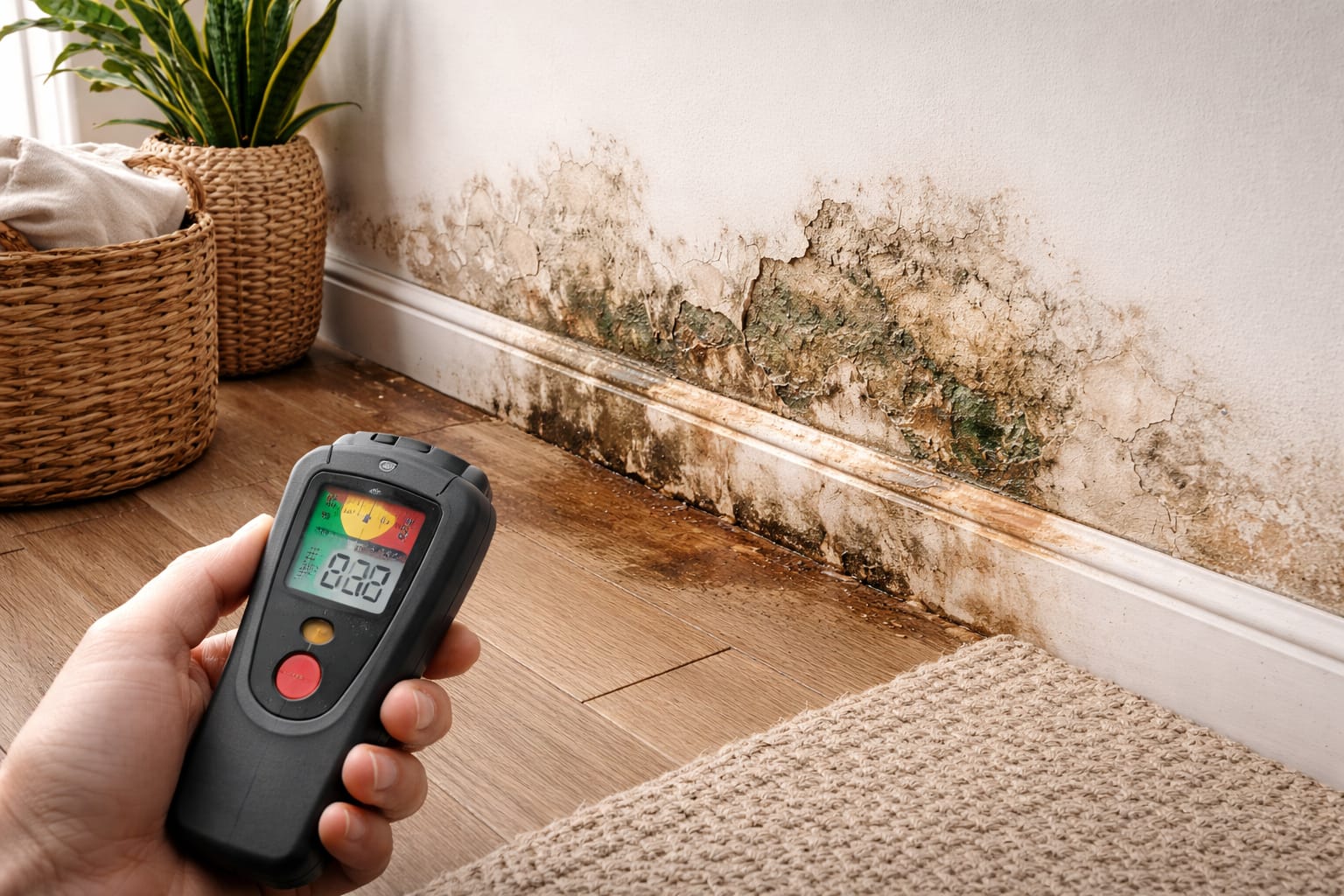
Mould is a surface-level growth caused by condensation and high indoor humidity. It often appears in bathrooms, bedrooms, or poorly ventilated corners. While mould can trigger allergies and affect air quality, it doesn’t usually damage the structure of your home. Rising damp, however, leaves clear signs such as horizontal tide marks, white salt deposits (efflorescence), peeling paint near the floor, and swelling skirting boards. Recognising the difference is crucial because treating mould when the real problem is rising damp only masks the symptoms and allows structural damage to continue.
Key Signs of Rising Damp
- Moisture or peeling paint starting at floor level and rising upward
- White powdery deposits on walls (efflorescence)
- Swollen or decaying skirting boards
- Musty or earthy odour near walls
- Consistent moisture presence throughout the year
Why Professional Inspection is Important
DIY fixes like painting over the problem or using anti-mould sprays can temporarily improve the appearance but do not address the source of moisture. A professional inspection uses moisture meters to take readings at multiple wall heights. Rising damp typically shows higher moisture at the base of the wall that decreases as it moves upward. Mould and condensation show inconsistent readings without a clear vertical pattern. Proper diagnosis ensures that the right repair method is used and prevents repeated damage.
Practical Steps Homeowners Can Take
- Regularly inspect low walls and skirting boards for peeling paint, swelling, or white deposits.
- Monitor areas with recurring mould — if it appears in the same spot repeatedly, moisture may be rising through the wall.
- Pay attention to damp odours or musty smells that persist despite ventilation.
- Schedule a pre-purchase rising damp inspection to avoid costly surprises in a new home.
- Avoid DIY painting or surface treatments as a permanent solution.
The Risks of Ignoring Rising Damp
Untreated rising damp can lead to structural problems including plaster failure, timber decay, warped flooring, and even long-term weakening of walls. It also creates conditions for mould growth, dust mites, and poor indoor air quality, which may affect your family’s health. Early detection and treatment protect your investment, maintain your property’s value, and prevent expensive repairs later.
Conclusion
Rising damp is a hidden structural issue, while mould is generally a surface-level problem caused by humidity. Confusing the two can lead to ineffective treatments and recurring damage. By recognising the signs, understanding the differences, and scheduling a professional inspection when necessary, homeowners can ensure the problem is addressed correctly. Acting early not only safeguards your home but also saves money, prevents structural damage, and ensures a healthier living environment. If you notice peeling paint, white deposits, or persistent damp odours at floor level, it’s time to take action — your home’s integrity depends on it.