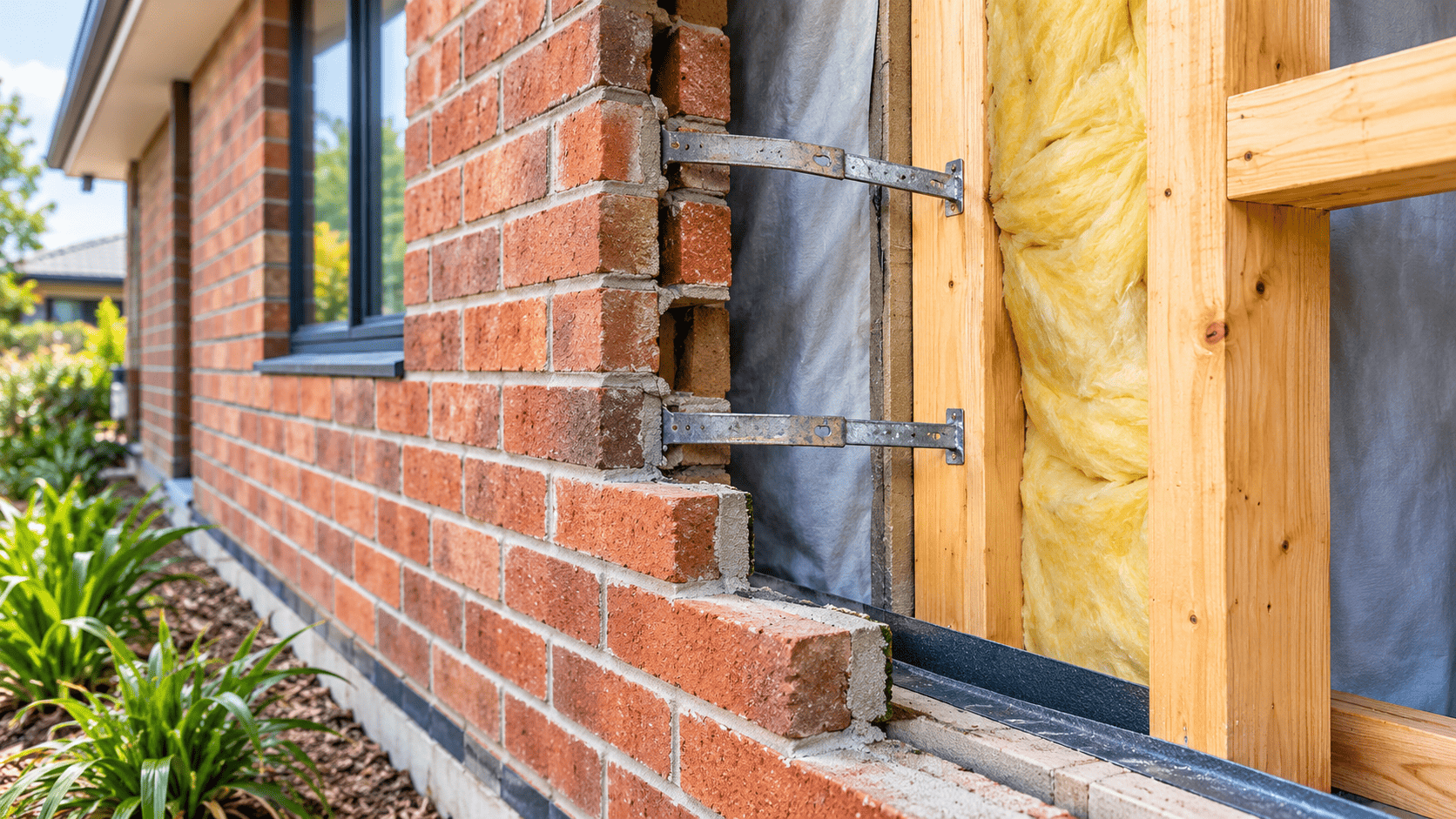
Brick veneer is one of the most common external wall construction methods used in Australian residential properties. It combines an external brick wall with an internal timber or steel frame, creating a wall system designed to provide weather protection, insulation opportunities and an attractive external finish.
Although brick veneer homes are widely used, their performance depends on several components working together correctly. Wall ties, cavity drainage, flashings, weep holes, damp-proof courses and connections around windows and doors all contribute to the way the wall system manages moisture and responds to environmental conditions.
For prospective property buyers, understanding how brick veneer construction works can provide valuable insight into the types of defects that may be identified during a building inspection.
What Is Brick Veneer Construction?
Brick veneer construction consists of an external masonry wall supported by a separate internal timber or steel frame. Unlike double-brick construction, the external brickwork in a typical brick veneer home is not intended to support the building's primary roof and floor loads.
The timber or steel frame generally carries these loads, while the brick veneer provides an external protective and decorative finish.
A cavity separates the external brickwork from the internal frame. This space helps manage moisture that may penetrate the outer masonry layer.
The main components of a typical brick veneer wall include:
- External brickwork: The visible masonry layer that provides weather protection and the external finish.
- Wall cavity: The space between the brickwork and internal frame.
- Wall ties: Metal connectors that secure the brick veneer to the supporting frame.
- Internal frame: Timber or steel framing that supports the building's internal wall lining and relevant building loads.
- Sarking or wall wrap: A membrane that may be incorporated into the wall assembly to provide additional weather protection.
- Damp-proof course (DPC): A barrier designed to restrict moisture movement through masonry from the ground.
- Weep holes: Openings that allow moisture collected within the cavity to drain externally.
- Flashings: Components designed to direct water away from vulnerable wall junctions and openings.
Each component has a specific function, and defects in one area may affect the overall performance of the wall system.
1. Deterioration or Corrosion of Wall Ties
Wall ties are important components of brick veneer construction because they connect the external brickwork to the supporting frame.
These connectors help maintain the relationship between the two wall layers and provide restraint against movement caused by wind and other forces.
Over time, certain metal wall ties may deteriorate due to prolonged moisture exposure, corrosion or unsuitable material selection.
Potential warning signs include:
- Cracking or separation in external brickwork.
- Localised bulging or displacement of masonry.
- Visible deterioration around mortar joints.
- Signs of movement near wall openings.
However, these symptoms are not exclusive to wall tie deterioration. Other factors, including foundation movement and masonry-related issues, can produce similar visible signs.
Wall ties are generally concealed within the wall cavity, meaning their actual condition cannot be confirmed through a standard visual inspection. Where concerning signs are identified, further specialist investigation may be recommended.
2. Blocked or Inadequate Weep Holes
Weep holes are small openings generally provided within the external brickwork to allow moisture collected inside the cavity to escape.
They are commonly located above damp-proof courses and at relevant flashing locations, depending on the wall design.
When weep holes become blocked by mortar, debris, dirt or landscaping materials, water may not drain as intended.
Possible consequences include:
- Moisture accumulation within the wall cavity.
- Increased exposure of adjacent building materials to moisture.
- Deterioration of nearby masonry components.
- Greater risk of moisture reaching internal wall areas.
During a building inspection, visible weep holes can be checked for obstruction, inappropriate covering and signs of damage.
It is also important to ensure that garden beds, paving and other external surfaces do not cover or interfere with these openings.
3. Incorrect Damp-Proof Course Positioning
A damp-proof course is a moisture-resistant barrier incorporated into masonry construction to limit moisture rising through porous materials.
In brick veneer homes, the DPC is generally positioned near the base of the external brickwork.
If the damp-proof course is incorrectly installed, damaged or bridged by external materials, its effectiveness may be reduced.
One common concern is the bridging of the DPC.
This can occur when soil, paving, garden beds or other materials are installed at a level that compromises the separation between the damp-proof course and external ground surfaces.
Potential warning signs include:
- Deteriorating mortar near the base of external walls.
- Discolouration or moisture marks.
- Salt deposits on masonry surfaces.
- Deterioration of lower wall finishes.
The appropriate clearance and detailing depend on the construction type and applicable requirements. These conditions should be assessed in their specific context rather than judged by appearance alone.
4. Defective Flashings Around Openings
Flashings are designed to direct water away from vulnerable areas of a building.
In brick veneer construction, they are particularly important around windows, doors, roof junctions and other wall openings.
If flashings are missing, damaged, incorrectly installed or poorly integrated with surrounding components, water may enter areas that should remain protected.
Common concerns include:
- Inadequate flashing above window openings.
- Poor integration between flashing and wall membranes.
- Damaged flashing materials.
- Incorrect drainage arrangements around openings.
- Deterioration of surrounding mortar joints.
These issues may contribute to moisture penetration, internal staining and deterioration of adjacent materials.
Because many flashing components are concealed within the wall assembly, a visual inspection may identify warning signs without confirming the complete installation detail.
5. Cracking in Brickwork and Mortar Joints
Cracking is one of the more noticeable conditions found in brick veneer properties.
However, not all cracks indicate the same underlying issue.
Cracks may develop due to several factors, including:
- Temperature-related expansion and contraction.
- Drying shrinkage in mortar.
- Movement associated with changes in ground conditions.
- Inadequate movement joint detailing.
- Changes in support conditions.
- Deterioration of surrounding materials.
The location, direction, width, pattern and distribution of cracking can provide useful information when assessing its possible cause.
For example, stepped cracking following mortar joints may require a different assessment from isolated hairline cracking in a localised section of brickwork.
Inspectors consider the visible characteristics of the cracking and whether additional investigation is warranted.
The presence of a crack alone does not establish its cause or indicate the severity of the underlying condition.
6. Poorly Installed Wall Ties and Masonry Connections
Apart from corrosion, incorrect installation or inadequate positioning of wall ties can affect how brick veneer is connected to the supporting frame.
Wall ties must be appropriate for the wall system and installed in accordance with relevant design and construction requirements.
Potential installation concerns may include:
- Inappropriate tie selection.
- Incorrect spacing or positioning.
- Inadequate embedment within mortar joints.
- Poor connection to the supporting frame.
- Deterioration of exposed connection components.
Most of these details are concealed after construction. Therefore, identifying installation defects may require access to construction documentation, photographs taken during building work or specialist investigation.
During a standard building inspection, visible symptoms such as unusual masonry movement or separation may indicate the need for further assessment.
7. Mortar Joint Deterioration
Mortar joints hold individual bricks together and contribute to the weather resistance of the external masonry surface.
Over time, mortar may deteriorate due to weather exposure, poor workmanship, incompatible materials or inadequate maintenance.
Common signs include:
- Crumbling or loose mortar.
- Gaps between bricks.
- Erosion along horizontal and vertical joints.
- Localised deterioration around openings.
- Water penetration associated with damaged joints.
Deteriorated mortar can reduce the effectiveness of the external wall as a weather-resistant layer.
The condition of the mortar should be assessed in relation to the age of the property, the extent of deterioration and the surrounding masonry.
8. Poor Detailing Around Window and Door Openings
Windows and doors create interruptions in the external brickwork, making their surrounding details important to the performance of the wall system.
Inadequate installation or deterioration around these openings can create pathways for water entry.
Potential defects include:
- Poorly finished brickwork around frames.
- Deteriorated perimeter sealants.
- Inadequate sill detailing.
- Damaged surrounding mortar.
- Visible gaps between frames and adjoining materials.
Water penetration around openings may lead to internal staining, deterioration of nearby finishes and damage to concealed materials.
During an inspection, visible areas around window and door frames should be assessed for signs of deterioration, gaps and moisture-related damage.
How Brick Veneer Defects Are Assessed During a Building Inspection
A professional building inspection involves examining accessible areas of the property for visible defects and conditions that may affect its overall condition.
When assessing a brick veneer home, relevant inspection areas may include:
External masonry
The inspector examines visible brickwork, mortar joints, cracking patterns, signs of displacement and general masonry condition.
Wall drainage provisions
Accessible weep holes and visible damp-proof course arrangements are checked for obstruction, covering and other apparent defects.
Window and door surrounds
Visible flashing-related concerns, deteriorated sealants, gaps and signs of moisture penetration are considered.
Internal wall surfaces
Internal walls are examined for staining, discolouration, cracking and other signs that may indicate moisture-related problems or movement.
Accessible roof and subfloor areas
Where accessible and within the inspection scope, relevant areas may be examined for visible conditions affecting the property's overall presentation and performance.
It is important to understand that a standard visual building inspection does not involve dismantling walls, removing bricks or accessing concealed wall cavities. Certain defects may require specialist assessment or further investigation.
Why Understanding Brick Veneer Construction Matters to Property Buyers
A brick exterior can create the impression of a durable and low-maintenance property. However, the visible brickwork represents only one part of a more complex wall system.
Important components such as wall ties, cavity drainage, flashings and moisture barriers may remain hidden after construction.
Understanding how these elements work together helps buyers appreciate why a property inspection should consider more than the appearance of its external walls.
Identifying visible defects and recognising conditions that may require further investigation can help prospective buyers make better-informed property decisions.
Conclusion
Brick veneer construction is widely used in Australian residential properties, but its long-term performance depends on the correct installation and ongoing condition of several interconnected components.
From wall ties and cavity drainage to damp-proof courses, flashings and mortar joints, each element contributes to the overall performance of the external wall system.
Understanding common brick veneer defects can help property buyers recognise potential concerns and appreciate the importance of a professional building inspection.
A careful assessment of accessible areas can identify visible warning signs and highlight where additional investigation may be necessary before proceeding with a property purchase.
Arrange a Pre-Purchase Building Inspection
At Premium Building & Pest Inspections, we provide professional building and pest inspection services to help property buyers better understand the condition of a property before making an important purchasing decision.
Our inspections help identify visible defects and areas that may require further attention.
Premium Building & Pest Inspections
Phone: 0466 001 551
Email: info@premiumbuildinginspections.com.au
Website: https://premiumbuildinginspections.com.au/