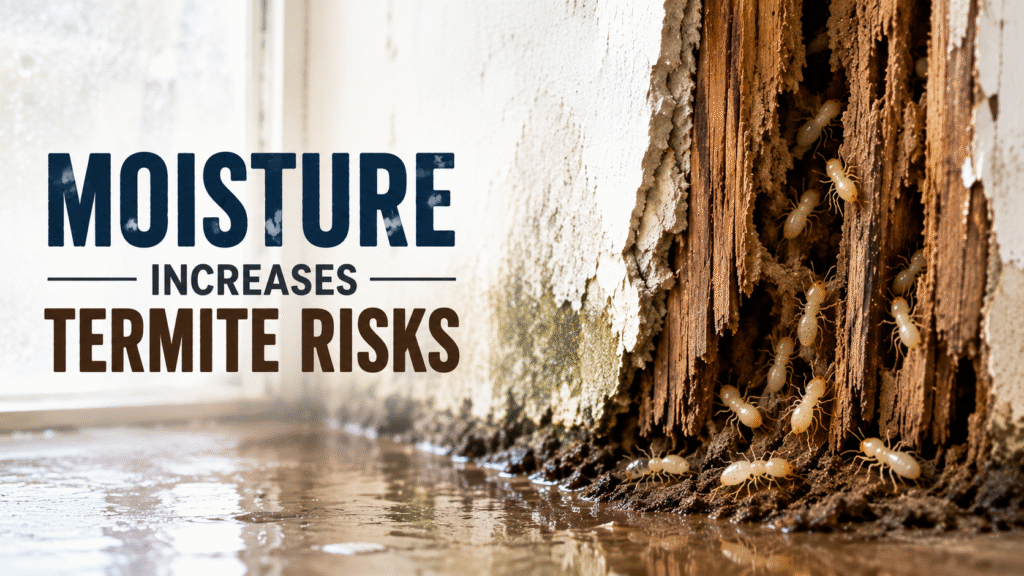
When people think about termites, they usually imagine old timber or visible pest damage. But one of the biggest hidden causes of teWhen people think about termite infestations, they often imagine old timber, neglected buildings, or visible pest damage. However, one of the most common hidden causes of termite infestations is actually moisture. Excess moisture inside or around a property creates the perfect environment for termites to survive, spread, and damage timber structures without immediate visible signs. In many cases, moisture problems develop slowly over time, making them difficult for property owners to detect until serious structural damage has already occurred.
Moisture-related termite risks are far more common than many people realise. Even a small amount of trapped moisture can gradually weaken timber, increase humidity levels, and create ideal nesting conditions for termites. Once termites discover a reliable moisture source and accessible timber, they can silently expand through walls, flooring, ceilings, and structural supports while remaining mostly hidden from view.
In many situations, termites are not actually the first problem — moisture is. Small plumbing leaks, roof leaks, blocked gutters, poor drainage, damp subfloors, or trapped humidity slowly weaken timber and make the property significantly more attractive to termite activity. Because these issues often remain hidden behind walls, under flooring, inside roof cavities, or beneath the property, owners may not realise there is a problem until costly repairs become necessary.
Why Moisture Attracts Termites
Termites survive best in warm and damp environments where moisture is consistently available. Moisture helps soften timber and creates easier access for termites to feed, tunnel, and spread through wooden structures. Damp timber becomes much easier for termites to consume compared to dry and healthy wood.
Moisture also supports the survival of termite colonies by helping maintain the humidity levels they require. In dry conditions, termites are more exposed and vulnerable, but damp environments allow them to travel safely while remaining hidden. This is one reason why properties with ongoing moisture issues often experience higher termite risks compared to well-maintained dry structures.
Properties with ongoing moisture problems commonly provide:
- Higher humidity levels
- Softer timber surfaces
- Hidden dark areas for nesting
- Easier underground access near foundations
- Damp soil conditions around the property
- Reduced airflow and trapped condensation
- Long-term timber deterioration
These conditions create an environment where termites can remain active for extended periods without detection.
This is why areas affected by leaks, rising damp, poor ventilation, or water penetration are commonly found to contain termite activity during professional building and pest inspections.
Common Moisture Problems That Increase Termite Risks
Leaking Plumbing
One of the most common causes of moisture-related termite activity is leaking plumbing. Hidden leaks inside bathrooms, kitchens, laundries, wall cavities, or under sinks can slowly introduce moisture into surrounding timber and structural materials.
Because these leaks are often concealed, they may continue for months without visible signs. Over time, surrounding timber absorbs moisture, becomes softer, and creates ideal feeding conditions for termites. By the time stains, bubbling paint, or mould growth become visible, termites may have already started damaging internal structures.
Even small plumbing leaks can create long-term moisture buildup if left untreated.
Roof Leaks and Ceiling Moisture
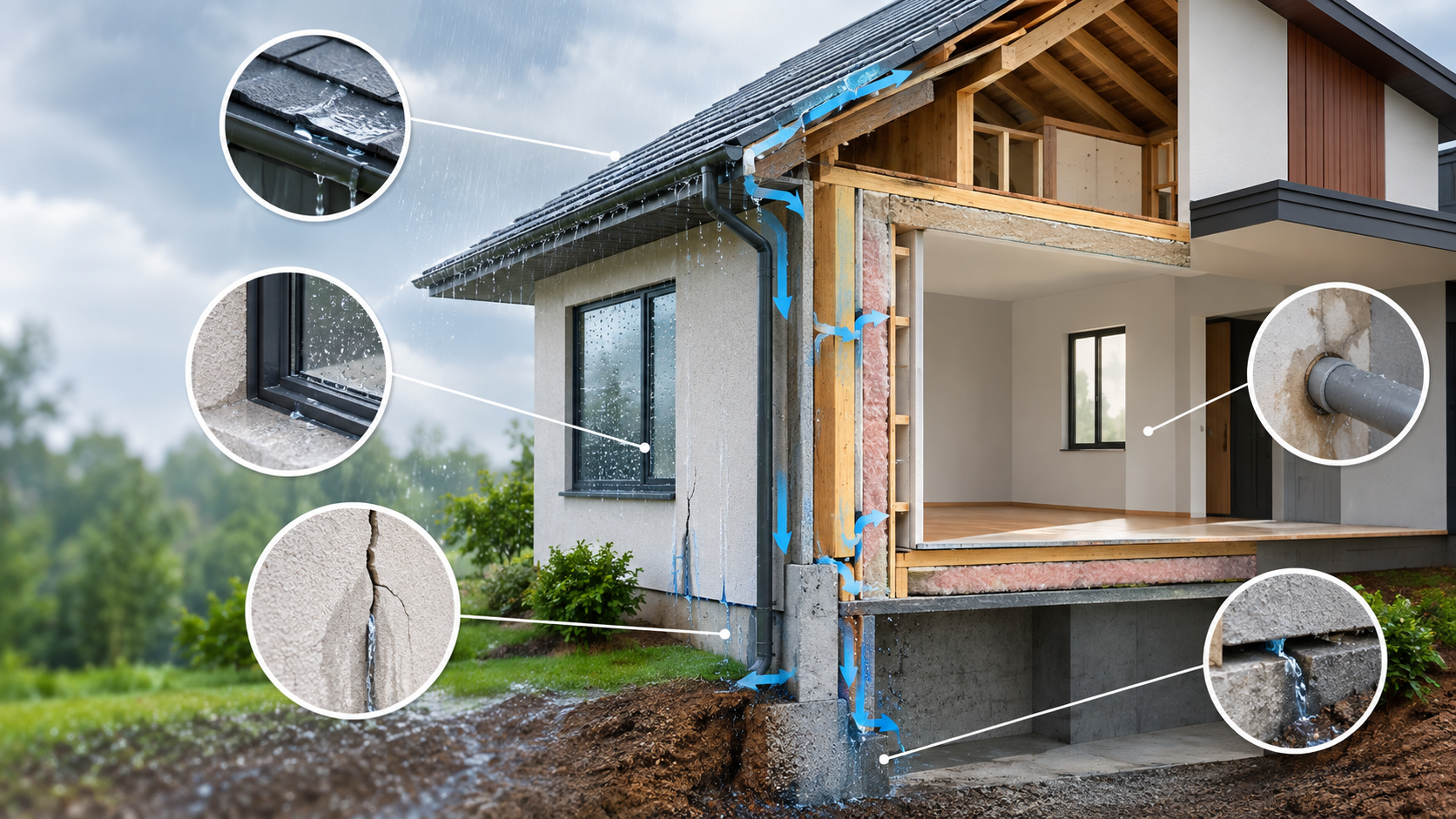
Roof leaks are another major contributor to termite risks. Broken roof tiles, blocked gutters, damaged flashing, or deteriorated roofing materials can allow rainwater to enter ceiling cavities and roof framing.
This trapped moisture slowly weakens timber supports and increases humidity levels inside roof spaces. Because roof cavities are dark, enclosed, and rarely inspected, termites can spread silently through structural beams and ceiling frames for long periods without detection.
Properties experiencing repeated roof leaks are often at significantly higher risk of hidden termite damage.
Poor Drainage Around the Property
Drainage problems around a building can also create ideal conditions for termites. When water collects near foundations, external walls, retaining walls, or garden beds, soil moisture levels rise and make it easier for subterranean termites to approach and enter the property.
Poor drainage may result from:
- Blocked stormwater systems
- Incorrect ground levels
- Faulty downpipes
- Water pooling near foundations
- Poor landscaping design
Constant damp soil around the property is considered one of the biggest termite risk factors because subterranean termites rely heavily on moisture-rich environments for survival.
Damp Subfloors and Crawl Spaces
Subfloors and crawl spaces are particularly vulnerable to moisture buildup because these areas often have poor ventilation and limited sunlight. Moisture may develop due to leaking pipes, groundwater seepage, condensation, or insufficient airflow.
Damp subfloors create ideal conditions for termite colonies because they provide:
- Constant humidity
- Protected nesting areas
- Easy access to timber flooring supports
- Minimal disturbance from occupants
Many serious termite infestations begin underneath the property where damage remains hidden for extended periods.
Poor Ventilation and Trapped Humidity
Ventilation plays a major role in controlling moisture levels inside a property. Areas such as roof spaces, basements, storage rooms, garages, and enclosed subfloors with poor airflow often trap humidity and condensation.
Warm, dark, and damp environments are highly attractive to termites because colonies can remain concealed while slowly expanding through timber structures. Poor ventilation may also contribute to mould growth, timber rot, and ongoing moisture retention, which further increases termite risks.
Signs Moisture Could Be Causing Hidden Termite Risks
Many early warning signs of moisture and termite activity appear minor at first and are often ignored. However, these small signs may indicate hidden structural issues developing behind walls or beneath flooring.
Property owners should pay attention to:
- Damp or musty smells
- Bubbling or peeling paint
- Soft or swollen timber
- Water stains on ceilings or walls
- Sagging floors
- Hollow sounding wood
- Cracked skirting boards
- Mould or mildew growth
- Visible mud tubes near foundations
- Increased indoor humidity
These warning signs may indicate hidden moisture problems that could eventually attract termite activity if left unresolved.
Why Hidden Termite Damage Becomes Expensive
One of the biggest dangers associated with termites is that the damage usually happens internally. Termites consume timber from the inside while the outer surface may continue to appear normal. This allows serious structural damage to develop unnoticed over time.
When moisture and termites combine, deterioration often spreads much faster. Damp timber weakens naturally over time, making it easier for termites to destroy flooring systems, wall frames, ceiling supports, structural beams, and load-bearing timber components.
Repair costs can quickly become expensive, especially if:
- Roof framing becomes unstable
- Floor supports weaken
- Structural beams deteriorate
- Timber walls begin shifting
- Large sections require replacement
- Internal wall damage spreads
- Flooring systems collapse or sag
In severe cases, untreated termite damage may affect the overall safety, structural integrity, and market value of the property.
How Professional Inspections Help Detect Hidden Problems
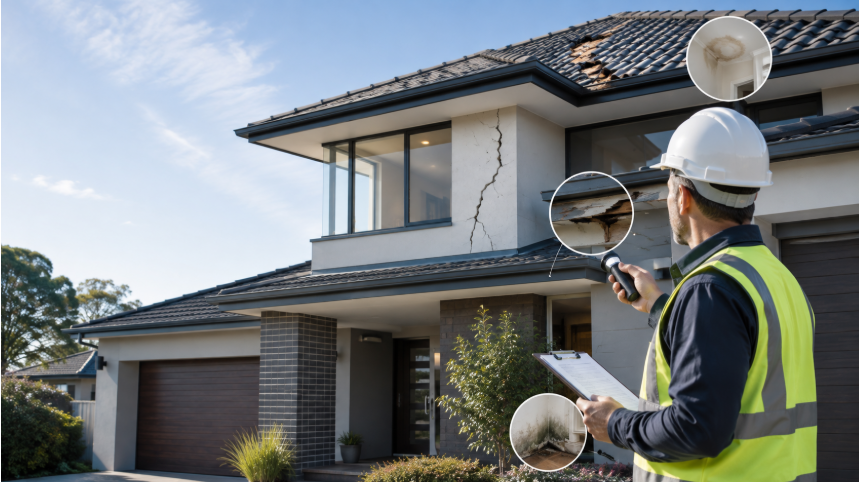
Professional building and pest inspections are one of the most effective ways to detect hidden moisture issues and termite activity early. Inspectors use specialised equipment such as moisture meters, thermal imaging cameras, and sounding tools to identify concealed dampness and possible termite movement behind walls, under flooring, and inside ceilings.
These inspections help:
- Detect hidden leaks
- Identify termite entry points
- Locate trapped moisture
- Assess timber damage
- Reduce future repair costs
- Identify high-risk areas early
Early detection is extremely important because repairing small moisture issues is far less expensive than repairing major termite-related structural damage.
Preventing Moisture-Related Termite Problems
Reducing moisture is one of the most effective ways to lower termite risks and protect timber structures. Simple preventative maintenance can make a major difference in protecting a property over the long term.
Property owners should:
- Repair plumbing leaks immediately
- Keep gutters and downpipes clean
- Improve airflow in damp areas
- Ensure proper drainage around the building
- Avoid timber-to-soil contact
- Inspect subfloors and roof spaces regularly
- Reduce indoor humidity levels
- Remove standing water near foundations
- Schedule regular building and pest inspections
Regular maintenance not only helps prevent termite infestations but also improves the overall condition, durability, and lifespan of the property.
Final Thoughts
Moisture problems are one of the leading hidden causes of termite infestations in residential and commercial properties. What may begin as a small leak, damp subfloor, blocked gutter, or poorly ventilated area can slowly create ideal conditions for termites to survive and spread unnoticed through timber structures.
Because termite damage often remains hidden until serious structural problems develop, early detection and preventative maintenance are essential. Controlling moisture levels, repairing leaks quickly, improving ventilation, and scheduling professional inspections can significantly reduce termite risks and protect the long-term safety and value of a property.
Professional building and pest inspections play a critical role in identifying hidden moisture issues before they become expensive termite problems. By managing moisture effectively and maintaining the property properly, owners can greatly reduce the risk of termite infestations and avoid costly structural repairs in the future.