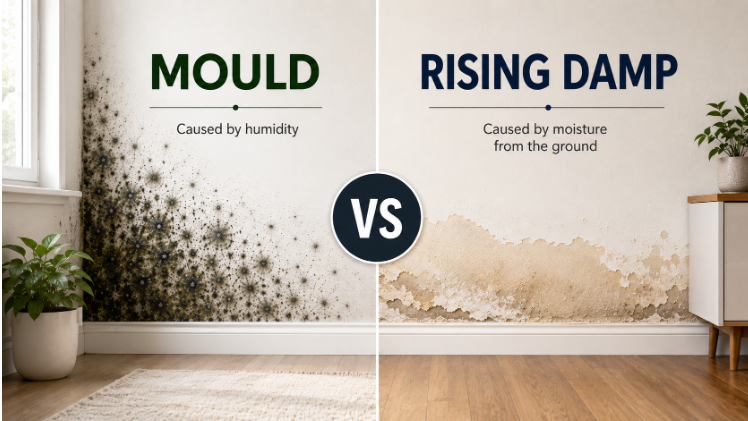
Have you noticed dark patches on your walls, peeling paint, or a persistent musty smell in your home? While many homeowners assume these are all signs of mould, the underlying problem isn’t always that simple. In many cases, the real culprit could be rising damp—a moisture issue that can quietly damage your property’s structure over time.
Although mould and rising damp often appear together, they are not the same problem. They have different causes, require different solutions, and can have very different impacts on your home. Misidentifying one for the other can lead to ineffective repairs, recurring issues, and unnecessary expenses.
Understanding the difference between mould and rising damp is the first step toward protecting your property, maintaining a healthy indoor environment, and preventing costly structural damage.
What Is Mould?
Mould is a type of fungus that grows in damp, humid environments. It reproduces by releasing tiny spores into the air, which settle on moist surfaces and begin to grow when conditions are favourable.
Mould commonly develops in areas with poor ventilation or excess moisture, including:
- Bathrooms
- Kitchens
- Laundry rooms
- Basements
- Around windows
- Inside wardrobes
- Ceilings affected by roof leaks
It often appears as black, green, white, or grey patches and is usually accompanied by a musty odour.
What Causes Mould?
Several factors can contribute to mould growth, including:
- High indoor humidity
- Poor ventilation
- Roof or plumbing leaks
- Condensation on walls and windows
- Flooding or water damage
- Inadequate insulation
Unlike rising damp, mould doesn’t always indicate a structural issue. In many cases, improving ventilation and addressing moisture sources can prevent future growth.
Health Risks Associated with Mould
Mould is more than just an aesthetic problem. Long-term exposure can affect indoor air quality and may contribute to various health concerns, particularly for children, older adults, and individuals with allergies or respiratory conditions.
Potential health effects include:
- Sneezing and coughing
- Nasal congestion
- Eye irritation
- Skin irritation
- Asthma flare-ups
- Respiratory discomfort
For this reason, mould should never be ignored, even if it appears to be a minor issue.
What Is Rising Damp?
Rising damp is a building defect that occurs when moisture from the ground travels upward through porous building materials such as bricks, concrete, and mortar by a process known as capillary action.
Most modern buildings include a damp-proof course (DPC), which acts as a barrier to stop groundwater from rising into walls. However, if the damp-proof course is damaged, deteriorated, or missing, moisture can gradually move upward through the walls.
Unlike mould, rising damp originates from below the building rather than from humidity inside the home.
Common Causes of Rising Damp
Rising damp may develop due to:
- A failed or damaged damp-proof course
- Missing damp-proof barriers in older buildings
- Poor drainage around the property
- Constant exposure to groundwater
- Defective construction materials
- Long-term moisture penetration
Without proper treatment, rising damp can continue for years, causing progressive damage to walls and interior finishes.
Signs of Rising Damp
Recognising rising damp early can help prevent extensive repairs.
Some of the most common signs include:
- Damp patches near the bottom of walls
- Peeling or bubbling paint
- Cracked or crumbling plaster
- White powdery salt deposits (efflorescence)
- Rotting skirting boards
- Warped timber flooring
- Persistent damp odour
- Discoloured walls close to floor level
Unlike mould, rising damp usually affects only the lower sections of walls because groundwater can rise only to a limited height.
Mould vs Rising Damp: Key Differences
Although they may appear similar at first glance, mould and rising damp have distinct characteristics.
| Feature | Mould | Rising Damp |
| Primary Cause | Excess humidity and condensation | Moisture rising from the ground |
| Typical Location | Bathrooms, kitchens, ceilings, windows | Lower sections of walls |
| Appearance | Black, green, or white fungal growth | Tide marks, peeling paint, salt deposits |
| Main Concern | Indoor air quality and health | Structural damage and moisture intrusion |
| Smell | Musty odour | Damp earthy smell |
| Structural Damage | Usually minimal | Can become significant over time |
| Solution | Improve ventilation and remove moisture | Repair damp-proof course and treat moisture source |
Understanding these differences helps ensure the correct treatment is applied instead of simply masking the symptoms.
Can Mould and Rising Damp Occur Together?
Yes.
In fact, rising damp often creates ideal conditions for mould growth.
When walls remain damp for extended periods, moisture accumulates within building materials. This creates an environment where mould spores can thrive, particularly if ventilation is poor.
Many homeowners make the mistake of cleaning visible mould without addressing the underlying moisture problem. While this may temporarily improve the appearance of the wall, the mould often returns because the source of the moisture remains unresolved.
The key is identifying whether mould is the primary issue or simply a symptom of rising damp.
Why Accurate Diagnosis Matters
Treating mould when the real problem is rising damp can waste both time and money.
Similarly, assuming every damp patch is rising damp may lead to unnecessary repairs when poor ventilation is actually responsible.
An accurate diagnosis helps you:
- Identify the true source of moisture
- Avoid repeated repair costs
- Prevent long-term structural deterioration
- Protect indoor air quality
- Maintain your property’s value
- Plan effective and lasting repairs
Professional inspections use moisture detection equipment and visual assessments to determine exactly where the moisture originates.
How Building Inspections Help Identify the Problem
Professional building inspections play an important role in distinguishing between mould, rising damp, and other moisture-related issues.
During an inspection, experienced inspectors assess:
- Moisture levels within walls
- Signs of structural deterioration
- Water ingress from roofs or plumbing
- Ventilation issues
- Surface condensation
- Salt deposits associated with rising damp
- Damage to plaster, timber, and finishes
This comprehensive assessment allows homeowners to understand the underlying cause before investing in repairs.
Tips to Prevent Mould and Rising Damp
While not every moisture problem can be avoided, regular maintenance significantly reduces the risk.
Here are some practical ways to protect your home:
- Improve ventilation throughout the property.
- Repair leaking roofs, gutters, and plumbing promptly.
- Keep bathrooms and kitchens well ventilated.
- Ensure external drainage directs water away from the building.
- Monitor indoor humidity levels.
- Inspect walls regularly for early signs of dampness.
- Address peeling paint or damp patches as soon as they appear.
- Schedule professional building inspections if you notice persistent moisture problems.
Early intervention is almost always less expensive than major repairs later.
When Should You Seek Professional Advice?
If you notice persistent damp patches, recurring mould growth, peeling paint, or signs of moisture that continue to return despite cleaning or repairs, it is advisable to arrange a professional building inspection.
An experienced inspector can identify whether the issue is caused by rising damp, condensation, plumbing leaks, poor ventilation, or another source of moisture. Identifying the root cause early allows for targeted repairs and helps prevent more serious structural damage in the future.
Final Thoughts
Mould and rising damp may appear similar, but they are two very different problems that require different solutions. Mould is generally linked to excess humidity and poor ventilation, while rising damp results from groundwater moving upward through building materials due to a failed or missing moisture barrier.
Ignoring either issue can lead to escalating repair costs, reduced property value, and—in the case of mould—potential health concerns for occupants.
If you notice signs of dampness in your home, don’t rely on guesswork. A professional building inspection can accurately identify the source of the problem and provide the information you need to take the right corrective action.
Early detection and proper diagnosis are the most effective ways to protect both your property and the people living in it.