What Does a Building & Pest Inspection Actually Cover?
Buying a property involves much more than finding the right location or negotiating the right price. Every home has a history, and while many issues are visible during an open inspection, others remain hidden until long after settlement. Water damage concealed within walls, termite activity beneath the floor, deteriorating roofing materials, or movement caused by changing ground conditions can all lead to unexpected repair costs if they go unnoticed.
This is where a professional building and pest inspection becomes an essential part of the purchasing process. Rather than relying solely on appearances, an independent inspection provides a detailed assessment of the property’s accessible areas, helping buyers understand its overall condition before making a financial commitment.
Whether you’re purchasing your first home, upgrading to a larger property, or adding to your investment portfolio, having a clear understanding of what is—and isn’t—included in a building and pest inspection allows you to make informed decisions with greater confidence.
In this guide, we’ll explain exactly what a building and pest inspection covers, why it matters, and how the findings can help protect your investment.
What Is a Building & Pest Inspection?
A building and pest inspection combines two professional assessments into one comprehensive service. Together, they provide a clearer picture of the property’s condition and identify defects or pest activity that may not be obvious during a routine inspection.
The building inspection focuses on the visible condition of the home’s primary elements, identifying defects, deterioration, safety concerns, moisture-related issues, and signs of movement or damage. Inspectors carry out a non-invasive visual assessment of accessible areas in accordance with the relevant Australian Standards, providing buyers with practical information about the property’s condition.
The pest inspection complements this assessment by looking for evidence of termite activity, timber pests, wood decay, and environmental conditions that could increase the likelihood of future infestations.
Rather than viewing these inspections as separate services, many buyers choose to have both completed at the same time. This approach offers a more complete understanding of the property while saving time during the purchase process.
Building Inspection vs Pest Inspection
| Building Inspection | Pest Inspection |
| Examines the overall condition of the building | Identifies termites and other timber pests |
| Assesses visible defects and deterioration | Looks for timber damage and pest activity |
| Reviews roofing, walls, floors, ceilings, windows and external areas | Checks roof voids, subfloors and accessible timber elements |
| Identifies moisture-related concerns and safety issues | Highlights conditions that may attract termites |
Together, these inspections provide valuable information that can influence your purchasing decision, future maintenance planning, and even price negotiations.
Why Is a Building & Pest Inspection Important?
A property can present well during an inspection while still hiding defects that aren’t immediately obvious to an untrained eye. Fresh paint, renovated interiors, or well-maintained landscaping can improve first impressions, but they don’t always reveal what’s happening behind the scenes.
A professional inspection helps identify issues before ownership changes hands, giving buyers the opportunity to fully understand the property’s condition and potential future maintenance requirements.
Some of the most common benefits include:
- Identifying hidden building defects before settlement.
- Detecting active or previous termite activity.
- Highlighting moisture problems that could lead to mould or timber deterioration.
- Helping buyers estimate future repair or maintenance costs.
- Providing evidence that may support price negotiations.
- Reducing the risk of unexpected expenses after purchase.
For many buyers, the cost of an inspection is minor when compared with the financial impact of discovering significant defects after moving into the property.
What Does the Building Inspection Cover?
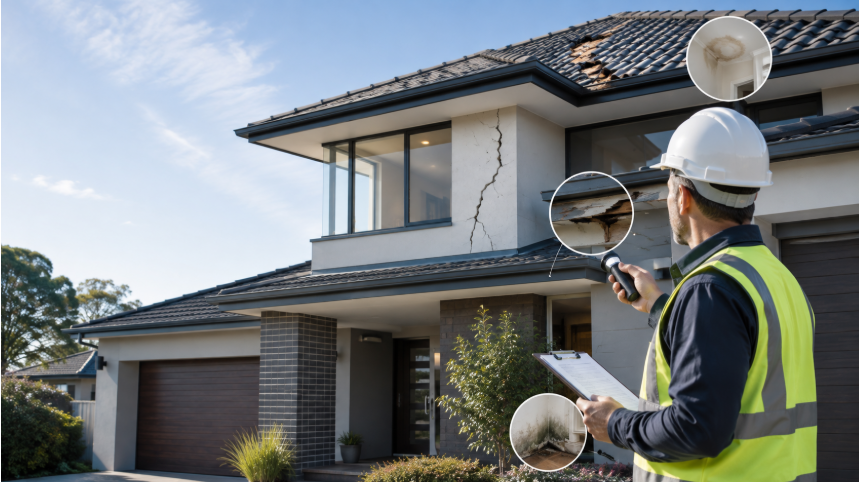
A professional building inspection involves a detailed visual assessment of the property’s accessible areas. While inspectors don’t remove wall linings or undertake destructive testing, they carefully examine visible building elements for defects, deterioration, safety concerns and maintenance issues.
The inspection generally follows Australian Standard AS 4349.1 and focuses on areas that could affect the property’s condition, performance or long-term durability.
Foundations and Building Movement
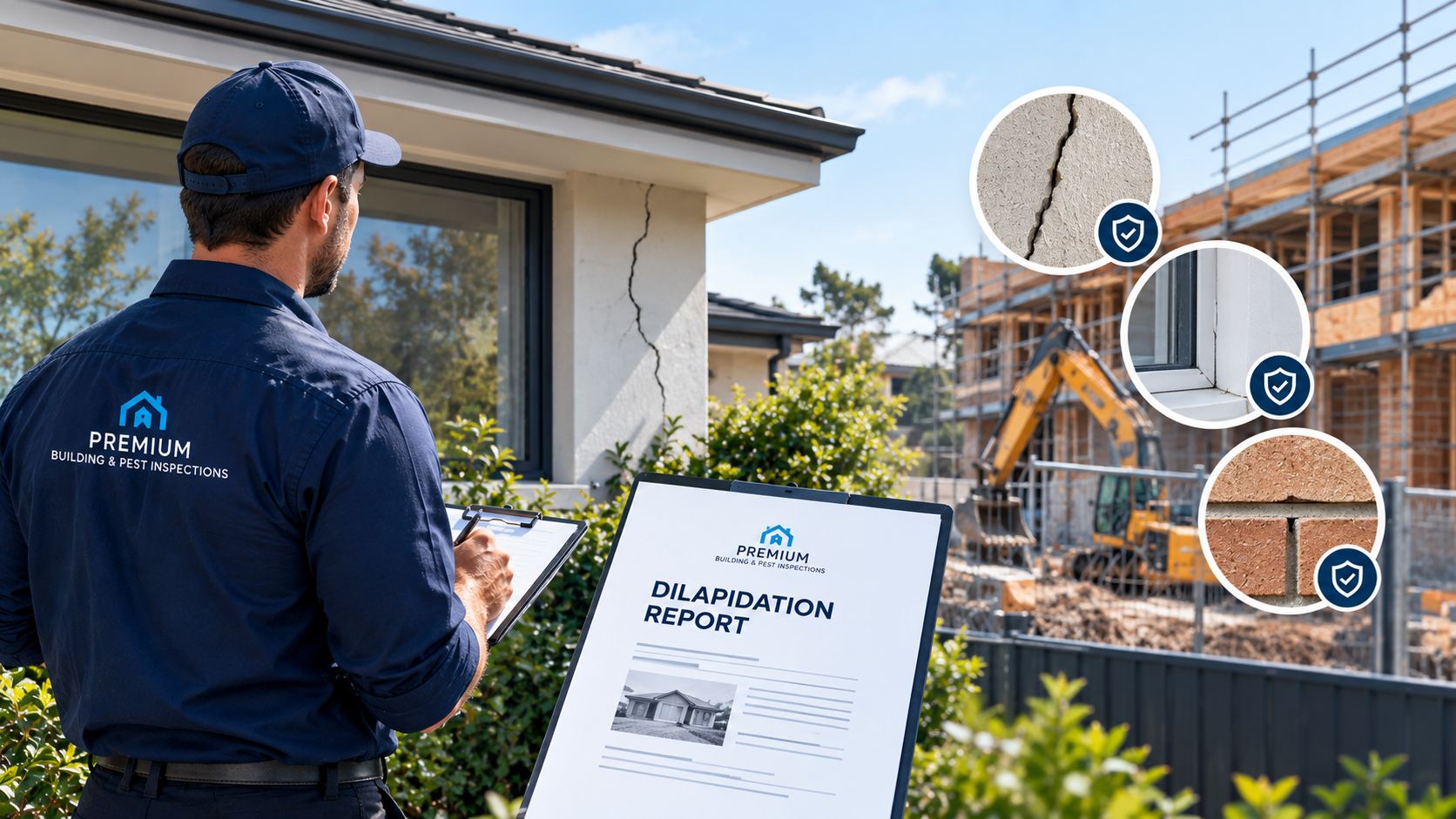
Although many foundation issues develop gradually, early signs are often visible throughout the property. Inspectors assess indicators such as uneven floors, cracks in brickwork, separation around doors or windows, and movement that may suggest ongoing settlement.
It’s important to understand that not every crack indicates a serious problem. Some movement occurs naturally as buildings age, while other defects may warrant further investigation by an engineer or specialist if significant movement is observed.
The inspection report explains these observations in clear language, allowing buyers to better understand the level of concern.
Roof Exterior
The roof protects the property from Australia’s changing weather conditions and is one of the most important areas assessed during an inspection.
Inspectors examine accessible roofing materials for signs of deterioration, damaged tiles or sheets, loose ridge capping, rust, deteriorated flashing, blocked gutters, and evidence of previous water entry.
They also look for maintenance issues that could eventually lead to internal water damage if left unattended.
Internal Living Areas
Every accessible room is visually inspected to identify defects that could affect the property’s condition or safety.
This includes assessing:
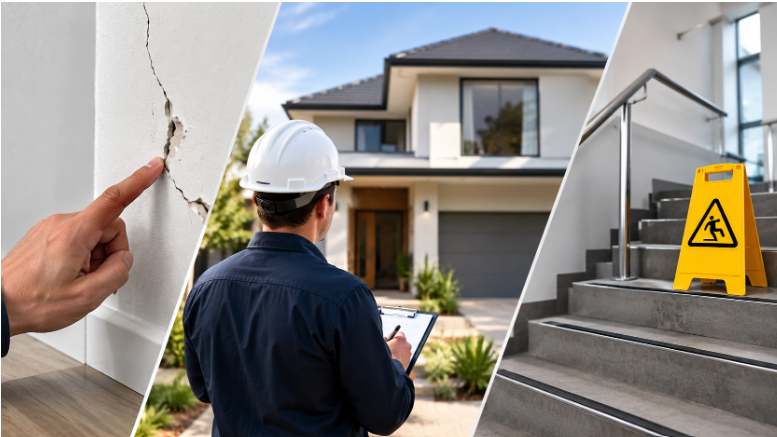
- Walls and ceilings for cracking, staining or moisture marks.
- Flooring for uneven surfaces or deterioration.
- Doors and windows for operation and alignment.
- Staircases, balustrades and handrails where applicable.
- Visible signs of water damage or mould.
Rather than simply listing defects, inspectors assess whether these findings appear consistent with normal ageing, poor maintenance, or issues requiring further attention.
External Areas
The inspection extends beyond the home’s interior.
Accessible external areas commonly include:
- External walls and cladding.
- Brickwork and render finishes.
- Garages and carports.
- Verandahs and decks.
- Retaining walls.
- Driveways and pathways.
- Drainage around the property.
Inspectors pay particular attention to defects that may contribute to moisture entry or accelerate deterioration over time.
For example, inadequate site drainage or ground levels positioned too close to external walls can increase the risk of dampness and create favourable conditions for termite activity.
Moisture, Ventilation and Drainage
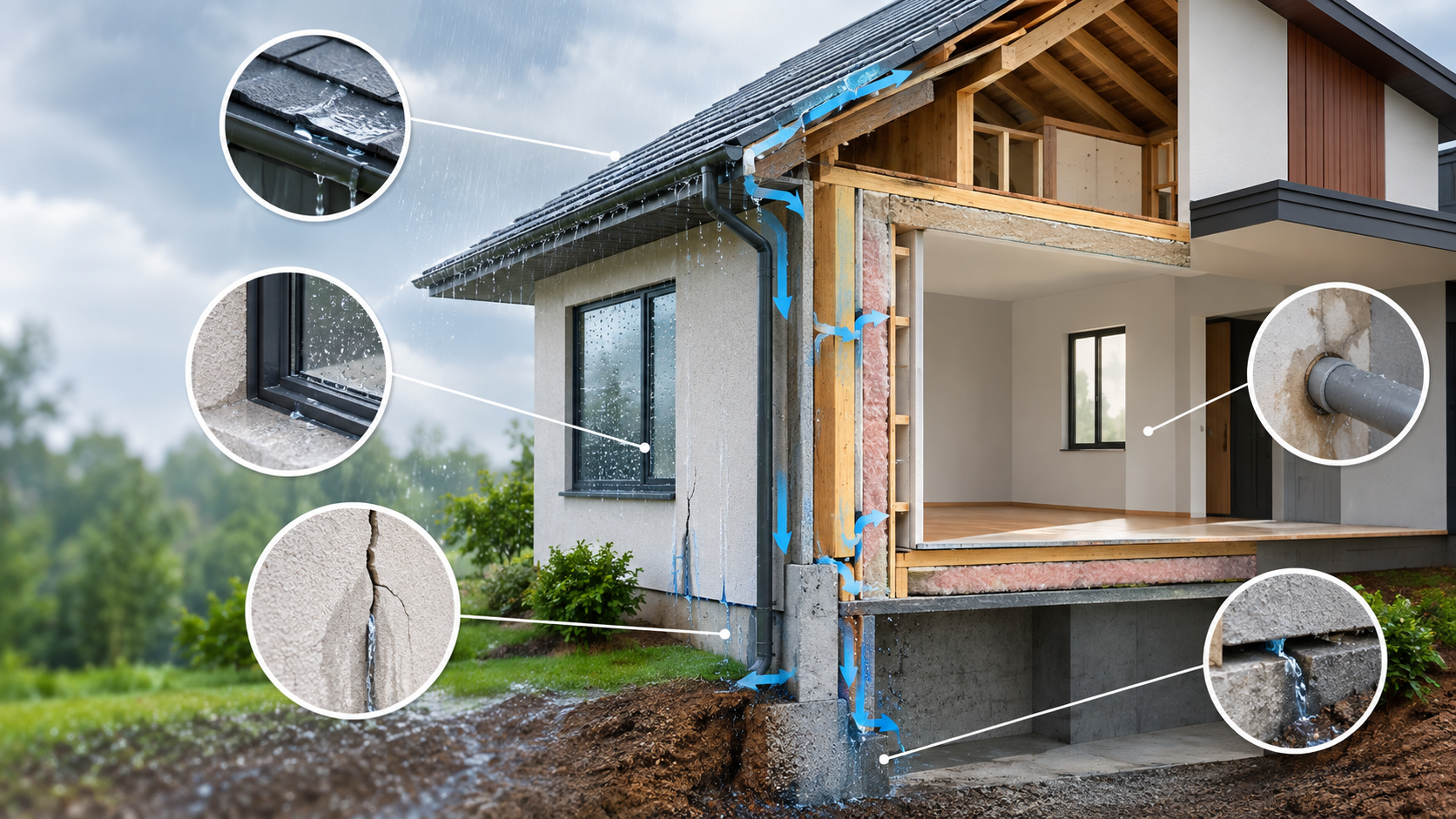
Moisture is one of the leading causes of building deterioration. Even relatively small leaks can result in mould growth, timber decay and damage if left unresolved.
During the inspection, attention is given to visible signs of dampness, poor ventilation, condensation, leaking fixtures, and areas where water may be collecting around the property.
Where appropriate, specialised moisture detection equipment may be used to assist with identifying elevated moisture levels in accessible areas.
Early identification of moisture-related issues allows buyers to address concerns before they develop into more extensive and costly repairs.
What Does the Pest Inspection Cover?
While a building inspection focuses on the condition of the property itself, the pest inspection is specifically designed to identify evidence of timber pests and conditions that may increase the likelihood of future infestations. In Australia, termites remain one of the most destructive pests affecting residential properties, often causing significant damage before any visible signs appear.
A professional pest inspection follows the principles of Australian Standard AS 4349.3 and involves a thorough visual assessment of accessible areas. Although inspectors cannot see inside wall cavities or beneath every surface without invasive testing, they use their experience, specialist equipment, and knowledge of termite behaviour to identify warning signs that may otherwise go unnoticed.
Termite Activity
Termites are responsible for millions of dollars in property damage across Australia every year. Unlike many other pests, they often remain hidden within timber, wall cavities, roof spaces or subfloors, making professional inspections essential during the buying process.
During the inspection, your inspector looks for evidence of:
- Active termite activity.
- Mud shelter tubes.
- Damaged or hollow-sounding timber.
- Termite entry points.
- Previous termite treatments.
- Areas where termites are likely to gain access.
If termite activity is detected, the report will outline its location, the extent of visible damage where possible, and recommend the appropriate next steps.
Roof Void Inspection
Where safe and accessible, the roof void is inspected for signs of timber deterioration, water ingress, pest activity and inadequate ventilation.
This area often reveals issues that are not visible from inside the living spaces, including:
- Water staining beneath the roof covering.
- Damaged roof timbers.
- Evidence of previous leaks.
- Timber decay.
- Signs of termite activity.
- Inadequate ventilation contributing to moisture build-up.
Early identification of these issues can prevent more extensive repairs in the future.
Subfloor Assessment
For homes with accessible subfloor areas, inspectors carry out a visual assessment beneath the property.
The subfloor can provide valuable information about the overall condition of the building, particularly where moisture or pest activity is present.
Inspectors commonly assess:
- Timber bearers and joists.
- Ventilation levels.
- Excess moisture.
- Drainage issues.
- Signs of timber deterioration.
- Evidence of termite activity.
Poor ventilation or excessive moisture beneath a home creates favourable conditions for termites and timber decay, making this area an important part of the inspection.
Conditions That May Attract Termites
A pest inspection doesn’t only identify existing infestations—it also highlights environmental conditions that increase the likelihood of future termite activity.
Common risk factors include:
| Condition | Why It Matters |
| Timber in direct contact with soil | Provides easy access for termites. |
| Poor drainage around the home | Creates excess moisture that attracts termites. |
| Leaking taps or plumbing | Maintains damp conditions favourable to timber pests. |
| Firewood or timber stored against the home | Can provide a direct pathway for termites. |
| Dense vegetation near external walls | Restricts airflow and traps moisture. |
Addressing these conditions early can significantly reduce the risk of future infestations.
Areas That Cannot Always Be Inspected
Building and pest inspections are visual and non-invasive assessments. This means inspectors can only report on areas that are safe and reasonably accessible at the time of the inspection.
Certain parts of a property may be inaccessible due to safety concerns, physical obstructions or construction methods.
Examples include:
| Area | Reason |
| Inside wall cavities | Hidden behind finished surfaces. |
| Beneath fixed floor coverings | Not visible without removing materials. |
| Roof spaces with restricted access | Safety limitations. |
| Areas behind heavy furniture or stored items | Obstructed during inspection. |
| Underground services | Outside the scope of a visual inspection. |
Where access is restricted, this will be clearly noted in the inspection report. If further investigation is recommended, the report will explain why and identify the appropriate specialist where necessary.
Common Issues Identified During Building & Pest Inspections
No property is completely free from defects, particularly older homes. Many issues identified during inspections are maintenance-related, while others may require more immediate attention.
Some of the most common findings include:
Cracking and Building Movement
Minor cracking can occur naturally over time; however, wider or progressive cracks may indicate movement that requires further assessment.
Moisture and Water Damage
Leaks around bathrooms, laundries, roofs and external walls can lead to mould, timber deterioration and internal damage if not addressed promptly.
Roofing Defects
Broken roof tiles, deteriorated flashing, blocked gutters and inadequate drainage frequently contribute to water ingress during heavy rainfall.
Timber Deterioration
Long-term moisture exposure can weaken timber components and create conditions that encourage pest activity.
Drainage Concerns
Poor site drainage allows water to collect around the building, increasing the risk of dampness, movement and termite attraction.
General Maintenance Issues
Inspectors often identify ageing sealants, deteriorated paintwork, loose fixtures and other maintenance items that, while not urgent, should be addressed to preserve the property’s condition.
How the Inspection Report Helps Buyers
A professional inspection report provides much more than a list of defects. It gives buyers a practical understanding of the property’s current condition and helps them make informed decisions before proceeding with the purchase.
A comprehensive report can help you:
- Understand the property’s overall condition.
- Identify defects requiring immediate attention.
- Plan future maintenance.
- Estimate potential repair costs.
- Negotiate with the vendor where appropriate.
- Decide whether additional specialist assessments are necessary.
Most importantly, the report provides independent information that supports confident decision-making before contracts become unconditional.
Final Thoughts
A building and pest inspection is one of the most valuable steps you can take before purchasing a property. It provides an independent assessment of accessible areas, identifies defects that may not be immediately visible and highlights pest activity or conditions that could affect the property’s long-term performance.
While no inspection can eliminate every risk, it significantly improves your understanding of the property’s condition and allows you to proceed with greater confidence. Whether you’re purchasing your first home, upgrading to a larger property or investing in real estate, a professional inspection helps reduce uncertainty and supports informed decision-making.
Arrange Your Building & Pest Inspection with Confidence
At Premium Building Inspections, we provide thorough pre-purchase building and pest inspections across Melbourne and surrounding suburbs. Our detailed reports are designed to help buyers understand a property’s condition, identify potential concerns and make informed decisions before settlement.
If you’re planning to purchase a home, unit or investment property, contact our team to arrange a comprehensive inspection and receive the independent information you need before committing to one of life’s biggest investments.