Swimming pools are a valuable feature of many Melbourne properties, offering a place to relax, entertain and enjoy the warmer months. However, owning a pool also comes with important safety responsibilities. A compliant pool barrier is essential for restricting unsupervised access, particularly for young children, and helping property owners meet Victoria’s pool safety requirements.
Despite the importance of pool safety, barriers can fail inspections for several reasons. Some issues involve the physical condition of the fence or gate, while others relate to gaps, access points, maintenance or changes made to the surrounding area. Even a barrier that appears secure at first glance may have defects that affect its compliance.
Understanding the common reasons pools fail barrier inspections can help property owners identify potential problems early, prepare for an inspection and address safety concerns before they become more significant.
Understanding Pool Barrier Compliance in Melbourne
In Victoria, swimming pools and spas that can contain water deeper than 300 mm are generally subject to applicable registration, barrier and safety requirements, subject to the relevant exemptions and provisions. These requirements are designed to prevent young children from accessing the pool area without supervision.
Pool barriers may include fences, gates and other approved safety arrangements that restrict access to the water. Compliance depends on the applicable regulations, the pool’s registration and approval history, and the requirements relevant to the property.
A pool barrier inspection considers more than the appearance of the fence. It also involves checking whether the barrier effectively restricts access, whether the gate operates as required and whether nearby objects or property features create potential climbing opportunities.
For Melbourne property owners, understanding these requirements is particularly important before the swimming season, when purchasing a property with a pool, or when completing renovations that may affect the pool area.
1. Pool Gates That Do Not Self-Close or Self-Latch
A gate that fails to close and latch properly is one of the most important pool barrier issues to address.
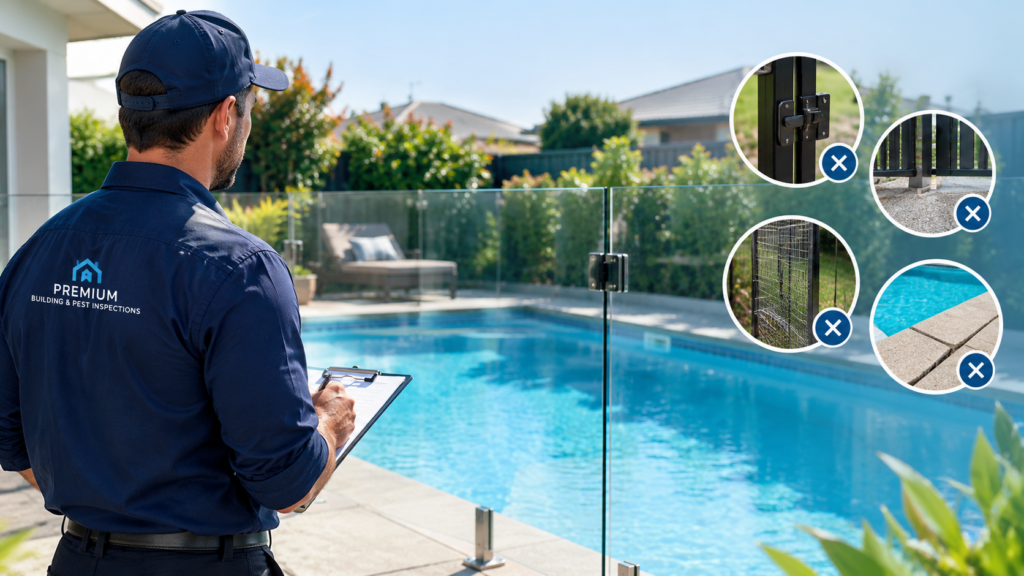
Pool gates are designed to restrict access to the swimming pool when they are not being used. Depending on the applicable requirements, gates generally need to be self-closing and self-latching, with the latch operating correctly from the required positions.
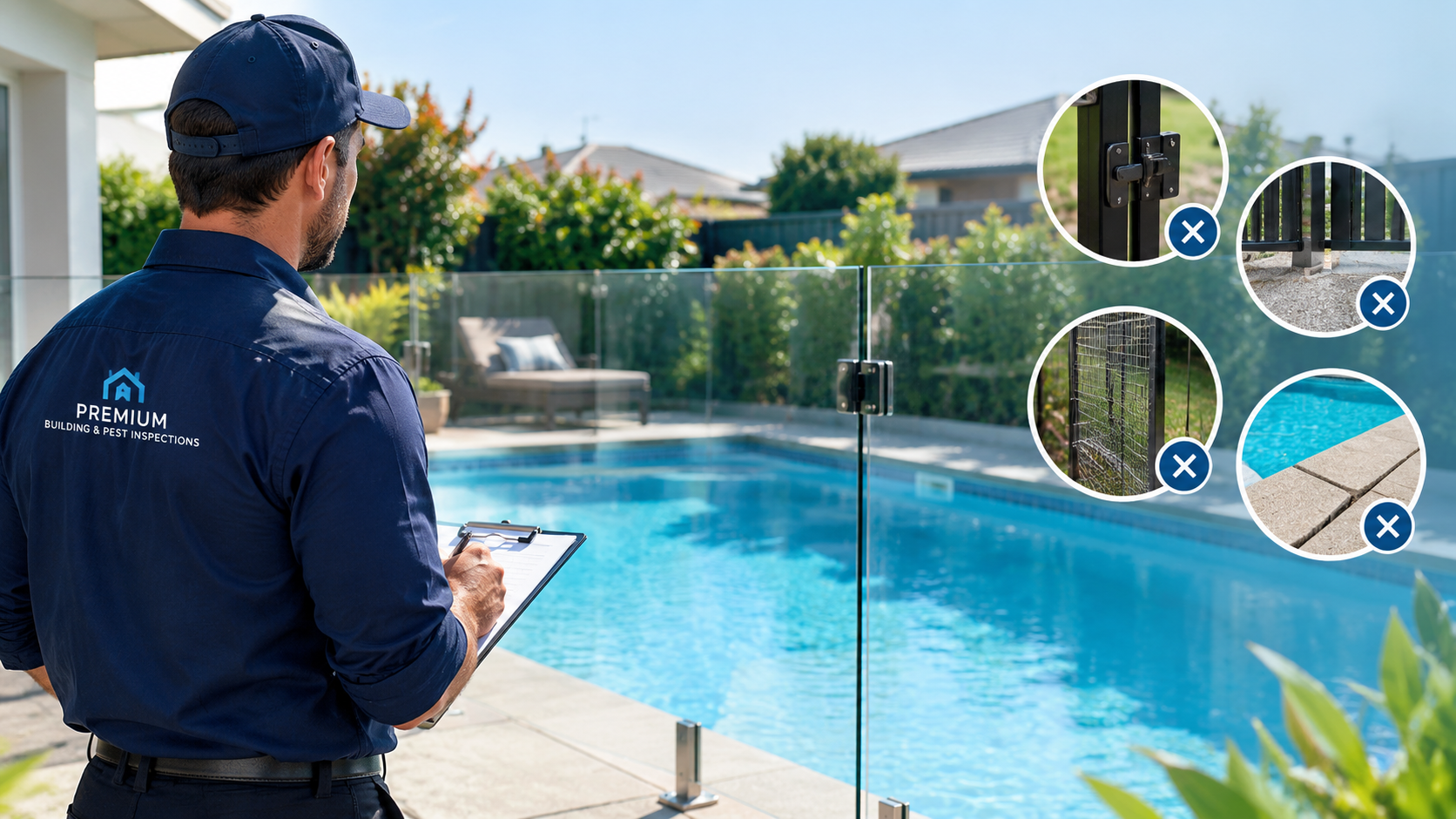
Common gate-related problems include:
- The gate does not close completely after being opened.
- The self-closing mechanism is damaged, worn or incorrectly adjusted.
- The latch does not engage securely.
- The gate drops or becomes misaligned over time.
- Hinges are loose or damaged.
- The gate can be opened in a way that does not meet the applicable safety requirements.
These issues can develop gradually because of regular use, weather exposure, ground movement or inadequate maintenance.
What property owners should check: Observe whether the gate closes fully and the latch engages reliably after the gate is released. Check for visible damage, loose hinges and alignment problems. A simple test can help identify obvious defects, but it does not replace a formal assessment against the applicable requirements.
2. Gaps Beneath or Around the Pool Barrier
A pool barrier must restrict access effectively, and gaps can undermine that purpose.
Excessive clearance beneath a fence or openings around barrier components may create an opportunity for a child to pass through or under the barrier. The permitted dimensions depend on the applicable barrier requirements and the specific circumstances.
Common examples include:
- Large gaps between the bottom of the fence and the ground.
- Openings beneath gates.
- Spaces between fence panels.
- Gaps created by uneven ground or changes in landscaping.
- Openings that develop after repairs or modifications.
A gap that was acceptable when the barrier was first installed may become a concern if the surrounding ground level changes.
What property owners should check: Inspect the entire perimeter, paying particular attention to the bottom of the barrier, gate clearances and joins between panels. Look for changes caused by soil movement, erosion, landscaping or the installation of new paving.
Do not assume that filling a gap with an improvised material will make the barrier compliant. Any repair should maintain the barrier’s required height, strength and configuration.
3. Fence Height and Climbable Features
A pool fence may appear tall enough but still present a compliance issue if nearby objects provide footholds or climbing opportunities.
Pool barrier requirements address both the height of the barrier and the surrounding area. The relevant measurements and non-climbable zones must be assessed in accordance with the rules applicable to the pool.
Common concerns include:
- Fence sections that do not meet the applicable minimum height.
- Objects placed too close to the barrier.
- Horizontal rails or other features that create footholds.
- Garden beds, retaining walls or raised surfaces that change the effective barrier height.
- Furniture, storage boxes or equipment positioned beside the fence.
- Decorative features that create opportunities to climb over the barrier.
These problems can occur after the pool area has been established. For example, adding a garden bed or moving outdoor furniture may change the conditions around an otherwise compliant fence.
What property owners should check: Examine the area on both sides of the barrier where accessible, paying particular attention to furniture, garden features, retaining walls and fixed structures. Assess whether changes to the surrounding area could affect the required barrier height or non-climbable zones.
4. Damaged, Loose or Deteriorating Barrier Components
Pool barriers are exposed to rain, sunlight, moisture, temperature changes and everyday wear. Over time, these conditions can affect their strength and performance.
A fence that was compliant when installed may no longer provide the required level of protection if its components deteriorate.
Potential issues include:
- Loose fence posts or unstable sections.
- Cracked, broken or missing panels.
- Corrosion affecting metal components.
- Deteriorated timber.
- Damaged hinges or latches.
- Loose fixings and connections.
- Glass panels or supporting hardware that have become damaged or unstable.
The severity of the issue depends on the defect and its effect on the barrier’s safety and compliance.
What property owners should check: Walk around the pool and look for movement, visible damage, corrosion and loose connections. Pay particular attention to gate hardware and sections exposed to moisture or frequent contact.
Where a barrier is damaged or unstable, arrange appropriate repairs rather than relying on temporary fixes that may not restore the required safety performance.
5. Nearby Objects That Allow Access to the Pool
Pool safety depends on the complete barrier arrangement, not just the fence itself. Objects near a barrier can create an unintended route into the pool area.
Items that may contribute to this risk include:
- Outdoor chairs and tables.
- Pot plants and raised planters.
- Ladders and storage equipment.
- Children’s toys and play equipment.
- Garden structures and retaining walls.
- Portable items left beside the fence.
A property owner may not consider these items part of the pool barrier, but their placement can affect whether the surrounding area meets the applicable requirements.
This issue is especially common in outdoor entertaining areas, where furniture is frequently moved to accommodate gatherings or changes in the garden layout.
What property owners should check: Keep the area around the barrier organised and review the placement of objects after making changes to the outdoor space. Fixed structures and permanent landscaping should also be considered during a compliance assessment.
Moving an object may address one concern, but the remaining barrier arrangement must still be checked against the relevant requirements.
6. Incorrect Gate Opening or Latch Arrangements
A pool gate can close automatically and still have other features that require attention.
The direction in which a gate opens, the location of its latch and the way the latch can be reached are all important considerations under the applicable pool barrier rules.
Potential problems include:
- A gate that opens in a direction inconsistent with the applicable requirements.
- A latch positioned where it can be reached too easily from outside the pool area.
- A latch that does not engage consistently.
- Gate hardware that has been replaced with an unsuitable alternative.
- Modifications that interfere with the gate’s intended operation.
These issues may arise following repairs, renovations or the replacement of gate components.
What property owners should check: Review the gate’s operation, opening direction, latch position and hardware condition. Because the requirements can depend on the applicable regulatory provisions and barrier arrangement, obtain a qualified assessment if there is uncertainty about whether the setup is compliant.
7. Changes to Landscaping, Paving or Ground Levels
Changes to the area surrounding a pool can affect a barrier even when the fence itself has not been modified.
Landscaping and renovation work may alter ground levels, create footholds or introduce gaps beneath the barrier. New paving can also change the relationship between the fence, gate and surrounding surfaces.
Examples include:
- Raising the ground level with new soil or garden beds.
- Installing paving that changes the clearance beneath a gate.
- Adding retaining walls close to the barrier.
- Creating steps or raised platforms beside the fence.
- Changing drainage arrangements in ways that lead to erosion or ground movement.
These changes are easy to overlook because they are often completed for appearance, access or drainage rather than pool safety.
What property owners should check: Review the pool barrier after landscaping, paving or other outdoor renovation work. Pay attention to altered ground levels, the clearance beneath gates, and any new features near the fence.
Where significant changes are planned, consider how they may affect pool barrier compliance before work begins.
8. Unauthorised Modifications and Incomplete Repairs
Pool barriers may be modified over time to improve access, replace damaged components or change the appearance of the pool area. However, an alteration that seems minor can affect compliance.
Examples include:
- Replacing a gate with a different design.
- Removing a fence panel to create easier access.
- Changing latch or hinge hardware.
- Installing a new fence section that differs from the existing arrangement.
- Making repairs without checking the applicable dimensions and requirements.
- Leaving a barrier incomplete after renovation work.
A repair should restore the required safety performance rather than simply make the fence look better.
What property owners should check: Review any previous repairs or modifications, especially if the original installation details are unavailable. Ensure replacement components are suitable for the barrier and that the completed arrangement meets the applicable requirements.
Where there is uncertainty, seek advice before making further changes.
9. Doors or Other Access Points That Affect Pool Safety
Not every pool access concern involves the main fence gate. Depending on the property’s layout and the applicable regulations, doors, gates or other access points may also need to be considered.
A door that provides access to the pool area, for example, may be relevant to the overall barrier arrangement where the applicable requirements permit or regulate that configuration.
Potential concerns include:
- An access point that does not restrict entry as required.
- Damaged or unsuitable locking or latching hardware.
- Modifications that create an unintended opening into the pool area.
- Access arrangements that differ from the approved or compliant setup.
The requirements should not be assumed to be identical for every property or barrier design.
What property owners should check: Identify all practical access routes into the pool area and confirm that the barrier arrangement meets the applicable rules. Where doors or alternative access arrangements form part of the safety system, their compliance should be assessed in context.
10. Poor Maintenance and Lack of Regular Checks
Even a well-designed pool barrier requires ongoing maintenance. Gate mechanisms wear out, fixings loosen and outdoor conditions can gradually change the barrier’s effectiveness.
Waiting until an inspection is due to check the pool area can allow small problems to become more serious.
A regular maintenance routine should include checking:
- Gate self-closing and self-latching operation.
- Fence stability and visible damage.
- Gaps beneath and between barrier components.
- Changes to nearby landscaping and ground levels.
- The position of furniture and other climbable objects.
- The condition of hinges, latches and fixings.
- Any changes made during renovation or repair work.
These checks can help property owners identify obvious concerns early. They do not establish legal compliance on their own, and a visual check should not be treated as a substitute for a required inspection or certification.
How to Prepare for a Pool Barrier Inspection
Preparing for an inspection involves reviewing the entire pool barrier arrangement rather than focusing on one or two visible components.
The following steps provide a practical starting point.
Step 1: Inspect the full perimeter
Walk around the pool and review all sections of the barrier. Look for gaps, damage, instability and changes to the surrounding ground.
Step 2: Check the gate
Observe the gate’s closing and latching operation. Look for misalignment, loose hinges, damaged hardware or inconsistent performance.
Step 3: Review the surrounding area
Identify furniture, garden features, equipment and other objects that may affect the barrier’s climbability or effective height.
Step 4: Review recent changes
Consider any landscaping, paving, repairs or renovations completed since the barrier was last inspected.
Step 5: Arrange repairs where necessary
Have defects assessed and repaired appropriately. Avoid assuming that a quick adjustment or temporary fix will satisfy the relevant requirements.
Step 6: Confirm the applicable requirements
Pool barrier requirements can depend on the pool’s registration and installation history, the relevant regulations and the barrier configuration. Seek professional guidance where the applicable standard or compliance status is unclear.
What Happens if a Pool Barrier Fails an Inspection?
If a pool barrier does not meet the applicable requirements, the property owner may need to arrange corrective work and take any further steps required by the relevant authority.
The appropriate response depends on the defects identified and the circumstances of the inspection. Some issues may be relatively straightforward to rectify, while others may require more extensive repairs or changes to the barrier arrangement.
Property owners should carefully review the inspection findings, clarify any requirements they do not understand and arrange suitable corrective work. They should also confirm whether a further inspection, compliance certificate or other formal step is required.
Most importantly, a failed inspection should be treated as a safety issue, not simply an administrative inconvenience. Any identified risk of unsupervised pool access should be addressed promptly.
Why Professional Pool Barrier Inspections Matter
A pool barrier may look secure while still containing defects that are difficult to identify without checking the relevant requirements. Gate performance, barrier measurements, surrounding structures and access arrangements all contribute to the overall assessment.
A professional inspection can help identify potential compliance concerns, explain the issues that require attention and provide a clearer understanding of the next steps.
For property owners in Melbourne, an inspection can be particularly useful when preparing for a required compliance assessment, purchasing a property with an existing pool, reviewing an older barrier or completing work that affects the pool area.
Professional guidance is also valuable when the applicable requirements are unclear or when previous modifications make it difficult to determine whether the barrier remains compliant.
Conclusion
Pool barrier compliance involves more than installing a fence around a swimming pool. Gate operation, gaps, barrier height, climbable objects, damaged components, landscaping changes and ongoing maintenance can all affect whether the arrangement meets the applicable safety requirements.
Regular checks can help Melbourne property owners identify visible issues before an inspection, while appropriate repairs and professional guidance can help address more complex concerns.
Because the applicable requirements may vary according to the pool and its circumstances, property owners should avoid relying on assumptions or generic measurements alone. A careful assessment of the complete barrier arrangement is the most reliable starting point for understanding potential compliance issues and maintaining a safer pool environment.
Arrange a Pool Barrier Inspection with Premium Building Inspections
If you own a property with a swimming pool in Melbourne and want to understand its pool barrier condition, Premium Building Inspections can help you take the next step.
Contact our team to discuss your inspection requirements and obtain further information about our pool barrier inspection services.
Premium Building Inspections
Phone: 0466 001 551
Email: info@premiumbuildinginspections.com.au