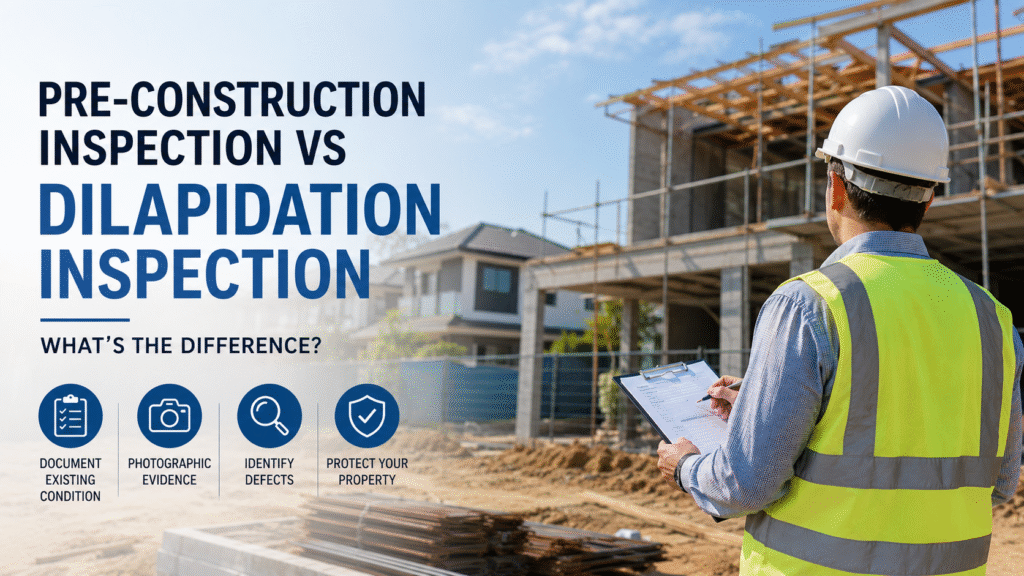
When construction, demolition, excavation or major renovation is planned on or near a property, documenting the property’s existing condition before work begins can be an important part of managing property-related risks.
Existing cracks, moisture damage, movement, deteriorated finishes, damaged paving and other defects may already be present before construction starts. Without a reliable record of the property’s condition, it can become difficult to determine whether a defect existed beforehand or developed during subsequent works.
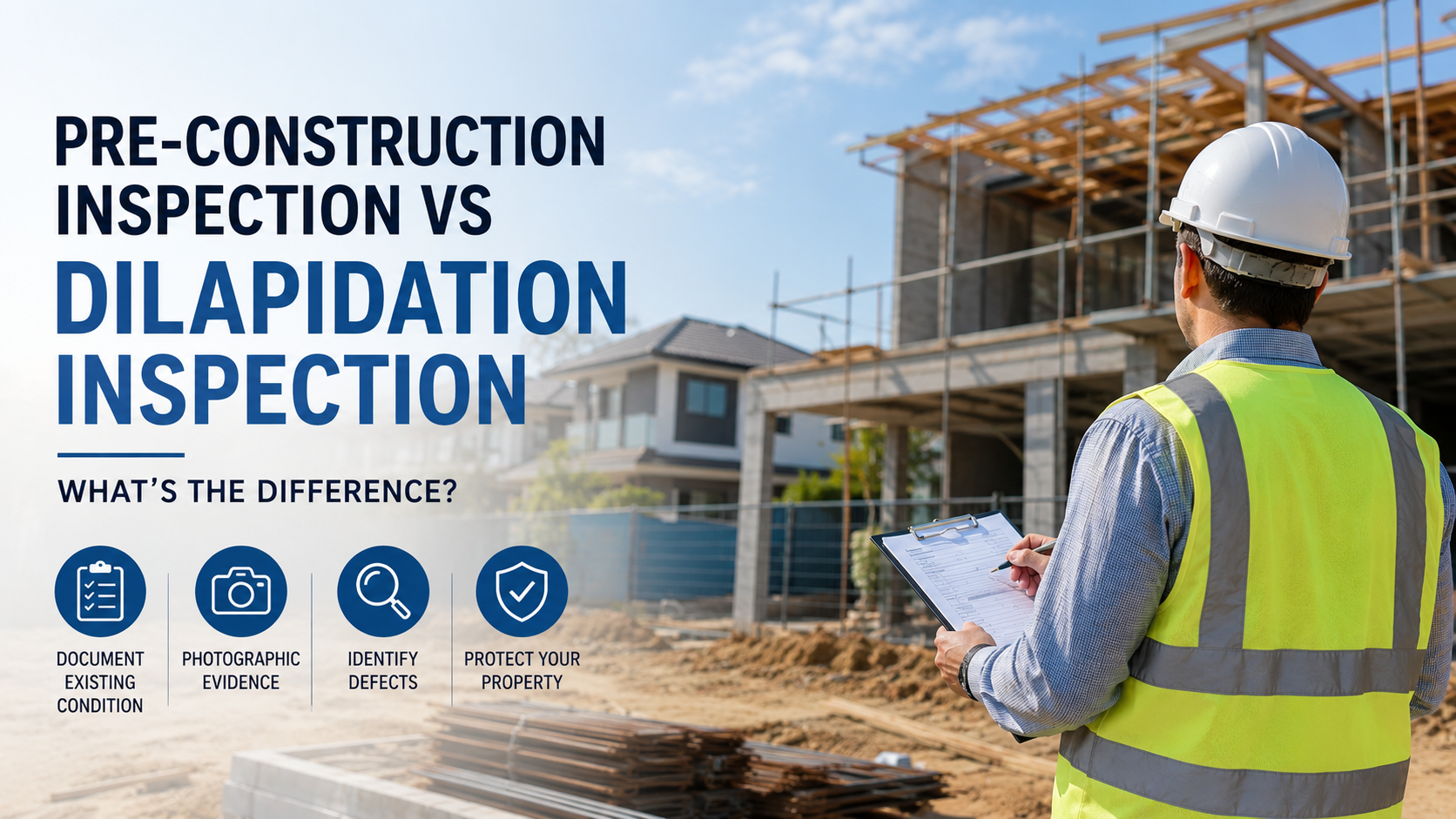
Two terms commonly used in this area are pre-construction inspection and dilapidation inspection. While they are closely related, they are not necessarily the same service.
Understanding the difference can help property owners, builders and developers determine the most appropriate inspection for their circumstances.
What Is a Pre-Construction Inspection?
A pre-construction inspection is carried out before building, renovation, demolition or other significant works commence.
Its purpose is to establish an understanding of the property’s existing condition before construction activity takes place.
Depending on the property and the agreed scope, an inspection may consider accessible areas such as:
- Internal walls and ceilings
- Floors and floor finishes
- Doors and windows
- External walls
- Roof and guttering
- Driveways and paths
- Fences and retaining walls
- Visible drainage conditions
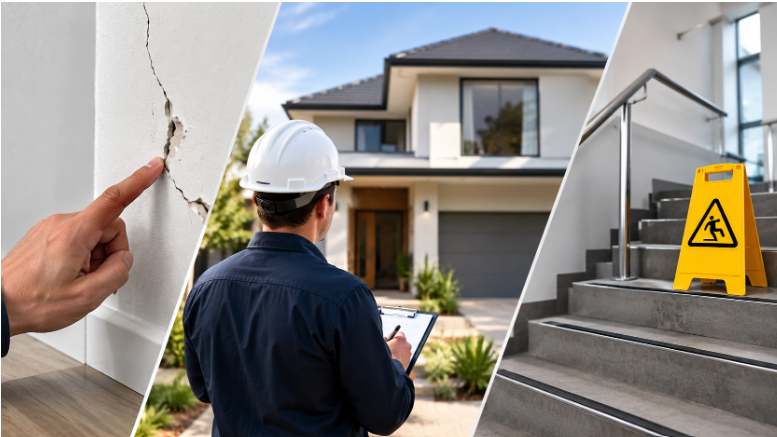
- Existing cracks and other visible defects
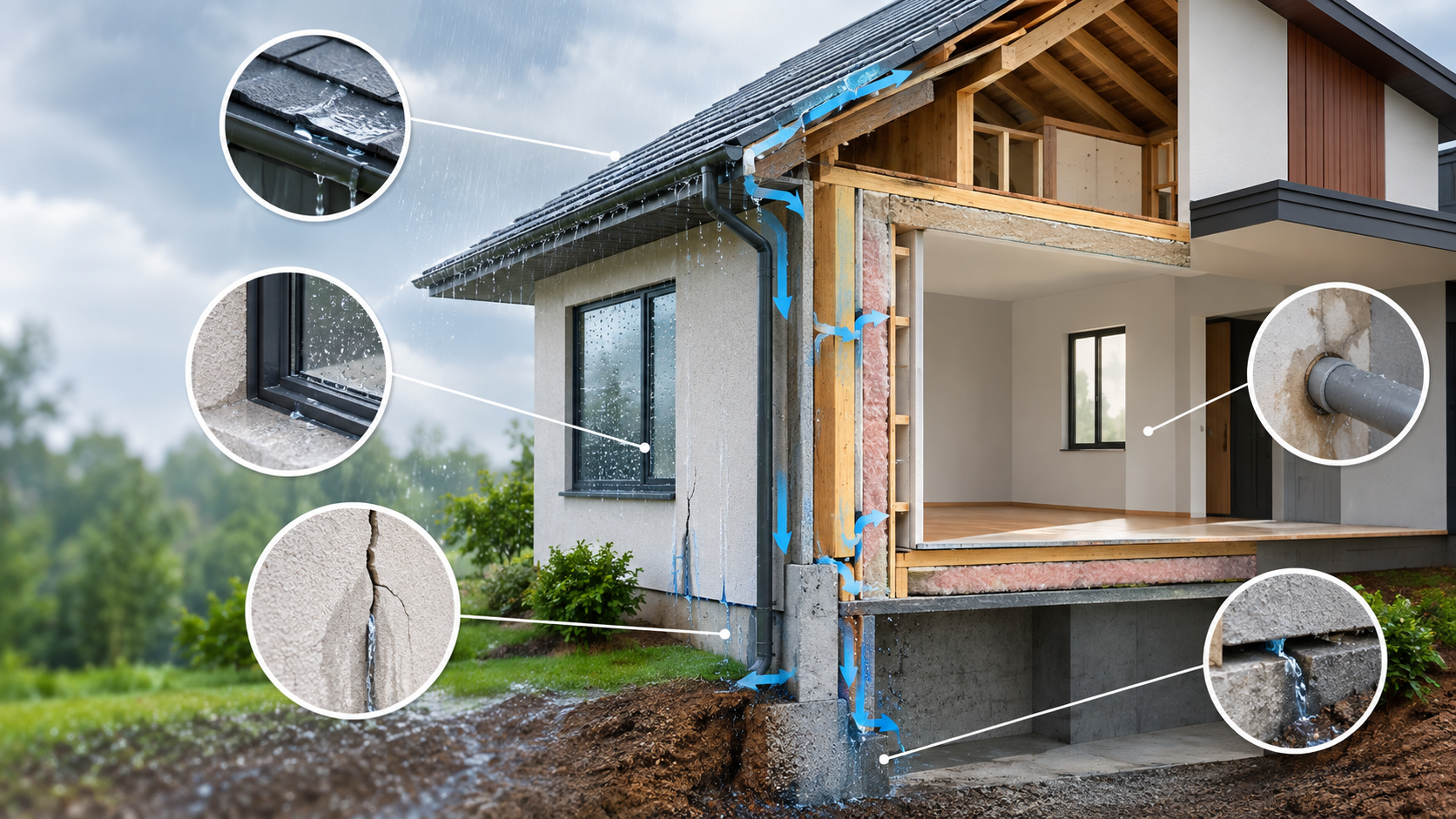
- Signs of moisture or water-related deterioration
For a homeowner planning a major renovation, for example, a pre-construction inspection can provide a useful record of the property’s condition before work starts.
It can also help identify existing defects that may require attention before construction proceeds.
What Is a Dilapidation Inspection?
A dilapidation inspection has a more specific focus.
It is generally undertaken before construction, demolition or excavation that could potentially affect an existing property or nearby structures. Its primary purpose is to document the condition that already exists before the works commence.
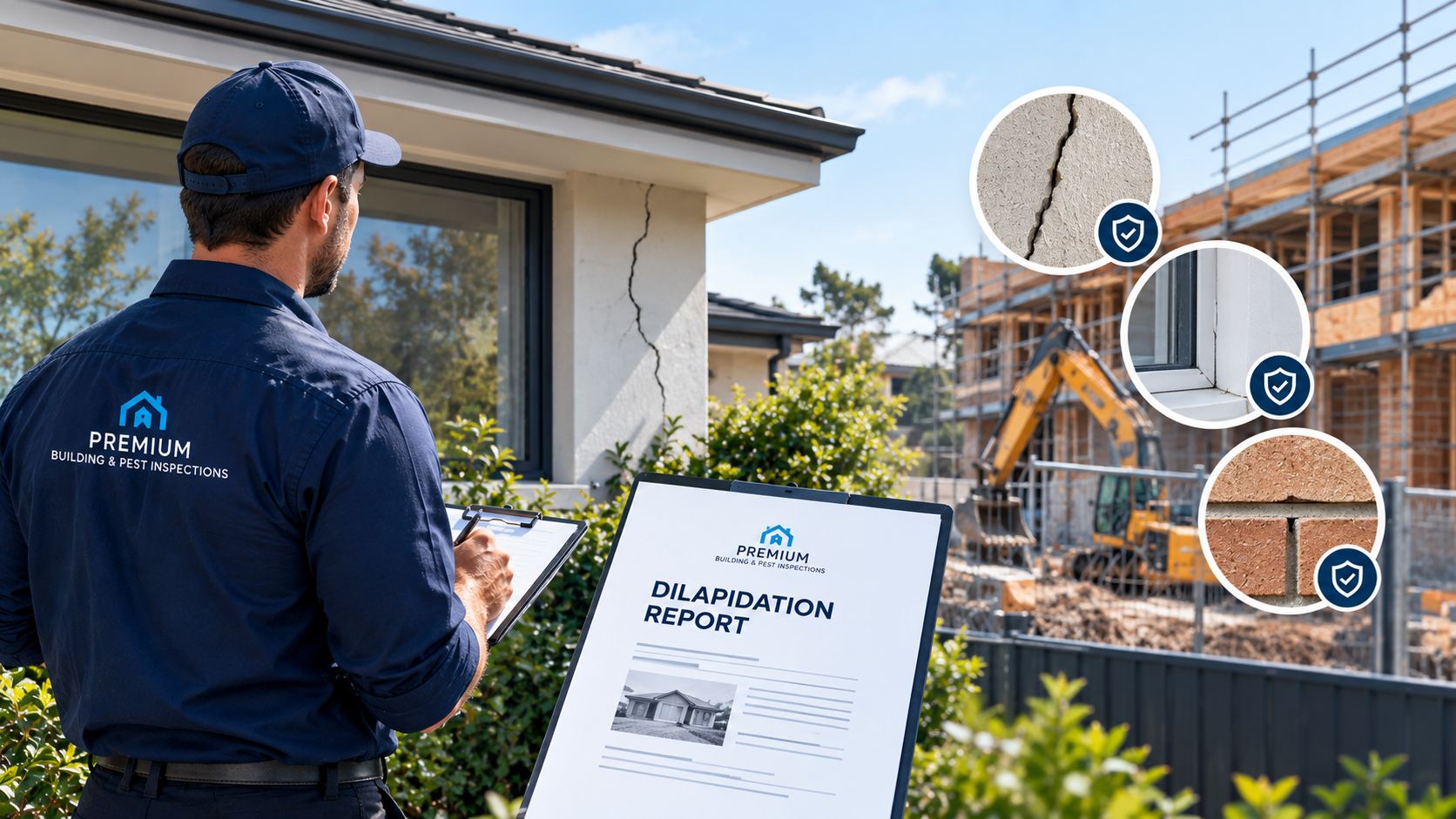
The inspection typically combines written observations with detailed photographic evidence.
Existing cracks, damp areas, surface damage, retaining walls, fences, driveways and other accessible building elements can be recorded as part of the condition assessment.
The resulting report provides a reference point that can be reviewed if the condition of the property changes during or after construction.
Pre-Construction Inspection vs Dilapidation Inspection
Although the terminology can vary between inspection providers, the key distinction is the purpose of the inspection.
| Pre-Construction Inspection | Dilapidation Inspection | |
| Primary purpose | Assess the property’s condition before construction or renovation | Establish a detailed record of existing condition before potentially disruptive works |
| Typical timing | Before construction begins | Before nearby construction, excavation or demolition |
| Main focus | Overall condition and visible defects | Existing defects and condition documentation |
| Photographic evidence | May be included | Usually an important component |
| External structures | May be assessed | Commonly documented where relevant |
| Future comparison | May be used as a reference | Often a key reason for the inspection |
There can be considerable overlap between the two services. The most important consideration is not simply what the inspection is called, but what will be inspected and how the property’s condition will be documented.
Why Document the Property Before Construction?
Many properties already have minor defects before construction starts.
A wall may have a hairline crack. A driveway may have existing movement. A retaining wall may show signs of age. There may be moisture staining around a window or deterioration to an external surface.
These conditions are not necessarily related to the upcoming construction.
Without photographs and written documentation taken before work begins, however, it may be difficult to establish what was already present.
This becomes particularly relevant when construction involves excavation, heavy machinery, demolition or other activities close to an existing property.
A clear condition record provides a point of reference. If the property is inspected again later, the two records can be compared to identify observable changes.
What Does a Dilapidation Inspection Look At?
The areas covered will depend on the property, accessibility and agreed inspection scope.
Internal Areas
Internal areas may include:
- Walls
- Ceilings
- Floors
- Door and window surrounds
- Internal finishes
- Visible cracks
- Existing staining or deterioration
Existing defects should be clearly identified and located so they can be recognised again if the property is assessed at a later stage.
External Areas
External areas can be particularly important when construction is taking place close to a boundary.
Depending on the inspection scope, these may include:
- External walls
- Driveways
- Paths and paving
- Fences
- Retaining walls
- Garages
- Outbuildings
- Accessible roof and guttering areas
Documenting these areas can provide a clearer picture of the property’s condition before nearby construction begins.
Why Photographs Matter
A condition report is much more useful when written observations are supported by clear photographs.
Consider an existing crack in an external wall. Simply stating that a crack was observed provides limited information.
A photograph can show its location, appearance and surrounding area, while the written observation provides additional context.
This combination creates a stronger record of the condition observed at the time of inspection.
The same principle applies to damaged paving, deteriorated fencing, moisture staining and other visible defects.
When Should a Dilapidation Inspection Take Place?
Timing is critical.
The inspection should be completed before the relevant construction activity begins.
Depending on the project, this may include work involving:
- Excavation
- Demolition
- Basement construction
- Major extensions
- Structural alterations
- Earthworks
- Retaining walls
- Heavy construction equipment
For neighbouring properties, the inspection is particularly useful when significant construction is planned close to the property boundary.
Once construction has commenced, it may no longer be possible to establish the property’s exact pre-construction condition.
Who Can Benefit From a Dilapidation Inspection?
Property Owners
Owners of properties adjacent to construction sites can document their property’s existing condition before nearby works commence.
Builders and Developers
Builders and developers may arrange condition inspections around a construction site as part of their project documentation and risk-management processes.
Property Managers
Property managers responsible for residential or commercial properties may also consider a dilapidation inspection when substantial development is planned nearby.
Homeowners Undertaking Major Works
For homeowners undertaking significant construction or renovation, a pre-construction condition assessment can establish a record of the property’s condition before work begins.
A Practical Example
Consider a Melbourne property located next to a site where excavation for a new development is about to begin.
Before construction, the existing property has several hairline cracks around window openings, a cracked section of driveway and some deterioration to a retaining wall.
These conditions are documented with photographs and written observations.
Construction then begins on the neighbouring site.
Several months later, the property owner notices changes to one of the cracks.
The original report provides a record of what was visible before construction. A subsequent inspection can then compare the property’s condition with the earlier documentation.
That comparison does not, by itself, establish that construction caused the change. However, it provides considerably more information than would be available if the property’s pre-construction condition had never been recorded.
Does a Dilapidation Report Determine Responsibility?
It is important to understand what a dilapidation report can and cannot establish.
A report documents the condition observed at the time of inspection. It does not automatically determine who is responsible if a defect changes later, nor does it by itself establish that construction caused the change.
If a dispute arises, the original condition report can form part of the evidence considered alongside subsequent inspections, construction records, photographs and other relevant information.
The usefulness of the documentation therefore depends heavily on the quality, accuracy and detail of the original inspection.
How Should You Choose Between the Two?
Rather than focusing only on the terminology, start with the purpose of the inspection.
If you are preparing to undertake significant work on your own property and want to understand and document its existing condition, a pre-construction inspection may be appropriate.
If construction, demolition or excavation is planned nearby and you want a detailed record of the property’s condition before those works begin, a dilapidation inspection is generally more closely aligned with that purpose.
For larger projects, both types of assessment may be relevant.
The inspection scope should be discussed before the inspection so that the areas most relevant to the proposed works are properly identified and documented.
Choosing an Inspection Provider
The quality of the condition record matters.
When arranging an inspection, consider whether the provider:
- Has appropriately qualified and experienced inspectors
- Clearly defines the inspection scope
- Documents both internal and external areas where relevant
- Provides detailed photographic evidence
- Clearly identifies existing defects
- Records areas that could be relevant to nearby construction
- Provides a structured and easy-to-understand report
It is also important to understand any limitations, including areas that cannot be accessed or inspected.
A clear scope ensures that everyone understands what the report is intended to document.
Establish the Baseline Before Work Begins
The condition of a property can change over time for many reasons. When significant construction is taking place nearby, having a clear record of the property’s condition before work starts becomes particularly valuable.
A professional dilapidation inspection provides that baseline through structured observations and photographic documentation.
For homeowners, builders and developers across Melbourne, documenting existing conditions before construction can provide greater clarity when the property’s condition is reviewed later.
If construction, excavation or demolition is planned on or near your property, arrange the inspection before work begins.
Premium Building & Pest Inspections provides dilapidation inspection services across Melbourne, documenting accessible internal and external areas and existing defects before nearby construction or renovation works.
Contact Premium Building & Pest Inspections to discuss the appropriate inspection for your property and upcoming project.