When purchasing a property, it is easy to assume that every issue identified during a building inspection carries the same level of importance.
It doesn’t.
A building inspection can identify everything from routine maintenance requirements and ageing materials to building defects and conditions that may present a safety concern. Understanding the difference can help property buyers interpret an inspection report more accurately and understand what may require attention.
Not Every Building Issue Is the Same
Buildings naturally change over time. Paint fades, sealants deteriorate, gutters become blocked, surfaces weather and fittings experience everyday wear.
These conditions do not automatically indicate a significant building defect.
At the same time, an issue that initially appears minor can sometimes be associated with a wider problem.
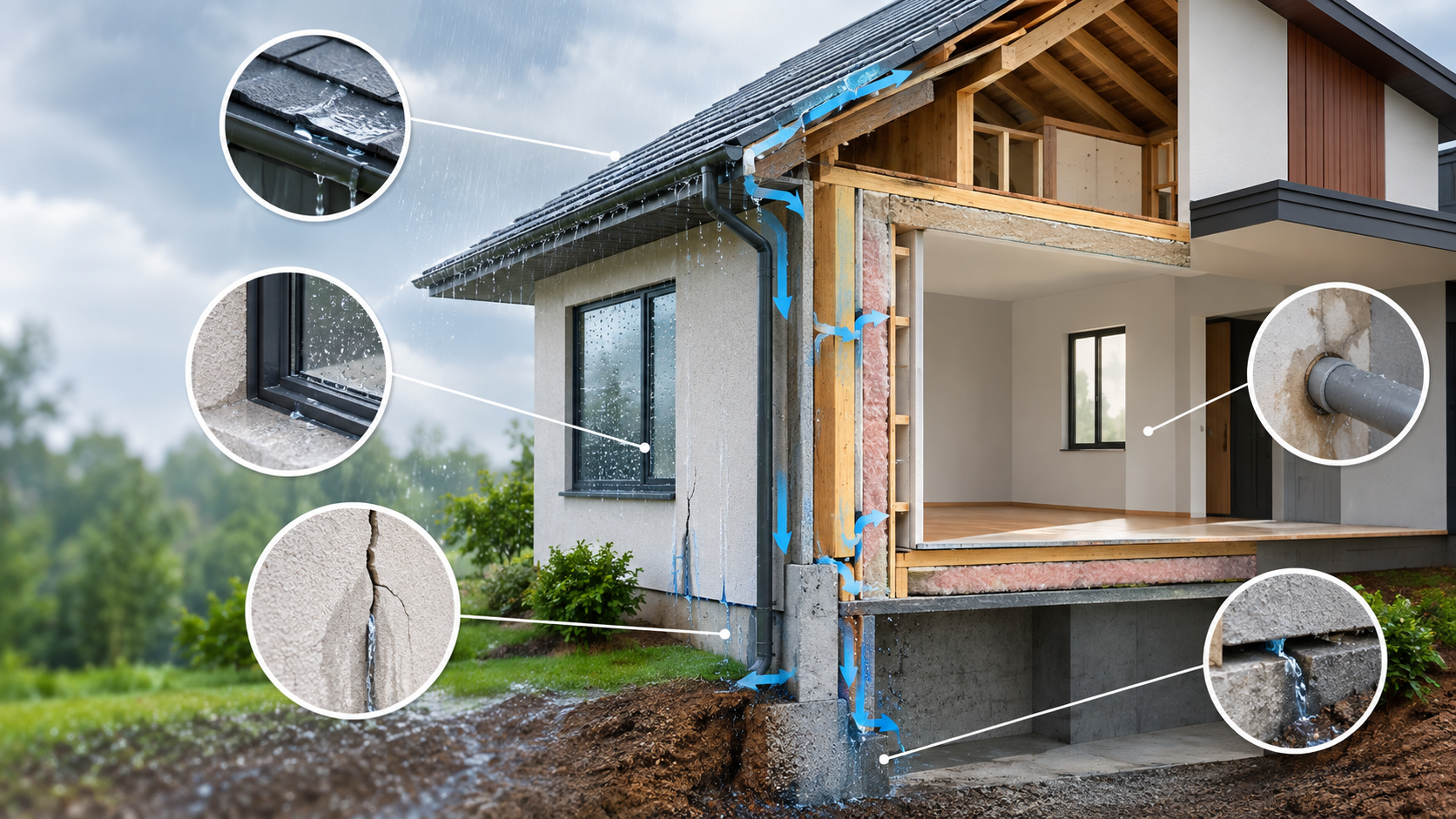
For example, deteriorated sealant around an external opening may initially appear to be a routine maintenance requirement. If water is able to enter through the affected area, continued moisture exposure could contribute to deterioration around the opening.
This is why inspection findings need to be considered in context rather than simply counted.
What Is a Building Defect?
A building defect generally refers to a fault, deficiency, deterioration or failure affecting a building element or component.
Defects can arise for different reasons, including ageing, weather exposure, installation, workmanship, previous repairs, inadequate maintenance or the interaction between different building components.
Common examples can include:
- Water penetration
- Damaged roof components
- Cracking
- Defective drainage
- Deteriorated external finishes
- Damaged windows or doors
- Deteriorated sealants
- Deficiencies around wet areas
- Deterioration associated with previous repairs
The term building defect does not automatically mean that extensive repairs are required.
Its significance depends on factors such as its location, extent, condition, cause and potential consequences.
A minor isolated defect may require routine attention, while another condition may warrant further investigation.
What Is a Maintenance Issue?
Maintenance is a normal part of property ownership.
Every building requires ongoing care because materials and components are exposed to weather, moisture, temperature changes and everyday use.
Typical maintenance issues may include:
- Peeling or deteriorated paint
- Blocked gutters
- Minor sealant deterioration
- Worn finishes
- Minor corrosion
- Overgrown vegetation
- Loose fittings
- Weathered external surfaces
- Damaged screens or minor hardware
A maintenance issue may not represent a significant defect, but it should not necessarily be ignored.
Regular maintenance helps protect the condition of a property and can reduce the likelihood of minor issues developing into more extensive problems.
When Can a Maintenance Issue Become a Bigger Concern?
The distinction between maintenance and a defect is not always fixed.
A maintenance issue can become more significant when it remains unresolved or contributes to another condition.
Consider deteriorated sealant around an external opening.
Initially:
Deteriorated sealant → maintenance requirement
If water begins entering:
Deteriorated sealant → potential water entry
If moisture continues affecting surrounding materials:
Water entry → moisture exposure → material deterioration
This does not mean every deteriorated sealant joint will result in water damage. It demonstrates why the surrounding circumstances matter when assessing an inspection finding.
What Is a Safety Concern?
A safety concern relates to a condition that may create a risk of injury or unsafe use.
Safety-related issues can occur throughout a property and may involve access areas, stairs, surfaces, openings, barriers or other building components.
Examples may include:
- Damaged stairs
- Loose or damaged handrails
- Trip hazards
- Unsafe access areas
- Unprotected openings
- Damaged surfaces
- Inadequate guarding
- Pool barrier concerns
- Loose building components
A safety concern can also be a defect or maintenance issue.
For example, a deteriorated handrail may require maintenance or repair. If its condition affects the safe use of a staircase, it may also represent a safety concern.
The potential consequence is therefore an important part of understanding the finding.
Why Context Matters During a Building Inspection
One of the most important aspects of a building inspection is understanding the relationship between different observations.
A single observation may provide limited information.
Several related observations may provide a clearer picture.
For example, an inspector may observe:
- Water staining internally
- Deteriorated external sealant
- Poor drainage near the affected area
- Deteriorated finishes
Each observation should be considered individually, but together they may indicate that moisture requires closer attention.
This is why a professional inspection involves more than simply moving through a checklist.
The location, condition, extent and relationship between findings all contribute to understanding the property’s condition.
The Same Issue Can Have Different Significance
The significance of an issue cannot always be determined by appearance alone.
Consider cracking.
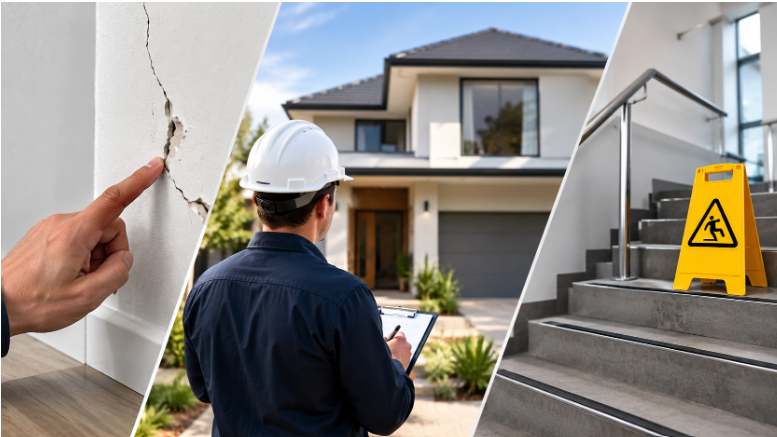
A small crack limited to a surface finish may have different implications from cracking accompanied by other observable conditions.
Similarly, a small area of staining could have a different significance depending on whether it relates to an old, resolved incident or an ongoing moisture concern.
This is why inspection findings should be interpreted alongside the surrounding evidence.
Why Location Matters
The location of a defect or maintenance issue can influence its potential significance.
Deterioration around a wet area, roof junction or external opening may have different implications from a cosmetic issue in a low-exposure area.
Likewise, a trip hazard in a frequently accessed area may require greater attention than a similar condition in an area that is rarely accessed.
Inspectors therefore consider not only what the issue is, but also where it occurs and how the area is used.
Why the Extent of an Issue Matters
The extent of an observation can also provide useful context.
An isolated area of deterioration may represent a localised maintenance requirement.
Deterioration occurring across multiple connected areas may warrant closer consideration.
This does not mean a larger affected area automatically indicates a serious problem. It means the extent of the observation can provide additional information when assessing the condition of the property.
What If the Cause Cannot Be Confirmed?
A visual building inspection has limitations.
Some areas may be concealed, inaccessible or affected by conditions that cannot be fully assessed without additional investigation.
An inspector may identify signs that could be associated with:
- Moisture entry
- Cracking
- Pest activity
- Plumbing concerns
- Electrical concerns
- Waterproofing issues
- Concealed deterioration
In these circumstances, an inspection may identify an indication or concern without establishing the precise cause or full extent.
Further assessment by an appropriately qualified specialist may then be recommended.
This does not automatically mean that a serious underlying defect has been confirmed.
It means additional investigation may be required to establish more information.
How to Read a Building Inspection Report
When reviewing a building inspection report, it can be tempting to focus on the number of issues identified.
However, the number of findings alone does not provide a complete picture of a property’s condition.
Instead, buyers should consider:
What was observed?
Understand the actual condition identified during the inspection.
Where is it located?
Consider whether its location affects its potential significance.
How extensive is it?
Determine whether it appears isolated or occurs across multiple areas.
Could other findings be related?
Several observations may provide more information when considered together.
Does it require maintenance or repair?
Some findings may simply require routine attention.
Could it present a safety concern?
Certain conditions may require greater attention because of how an area is accessed or used.
Is further investigation recommended?
Where the cause or extent cannot be established through visual inspection, additional assessment may be appropriate.
A Building Inspection Is About More Than Finding Faults
A professional inspection should not treat every imperfection as a major problem.
Equally, conditions should not be dismissed simply because they appear minor.
The purpose of a building inspection is to provide useful information about the property’s observable condition at the time of inspection.
For a buyer, this information can help identify maintenance requirements, understand potential concerns and determine whether further investigation may be appropriate before proceeding with a purchase.
Defects, Maintenance and Safety Concerns Can Overlap
These categories are not always completely separate.
One condition can involve more than one category depending on its circumstances.
For example:
Deteriorated stair component
→ maintenance issue because it requires attention
Damaged component affecting safe use
→ safety concern
Failure or deterioration of the component
→ potential building defect
The appropriate response depends on the actual condition and circumstances.
This is why inspection findings should be considered in context rather than reduced to a simple label.
What Property Buyers Should Remember
Finding maintenance requirements is normal, particularly when purchasing an established property.
The more important question is understanding what the findings mean and what may need to happen next.
A maintenance issue may require routine attention.
A defect may require repair or monitoring.
A safety concern may require prompt action or specialist assessment.
Some conditions may also require further investigation before their cause or extent can be established.
Understanding these differences gives buyers a better framework for interpreting a building inspection report and assessing the condition of a property.
Conclusion
A building inspection is not simply a search for everything that is imperfect.
Every property will have some level of ageing, wear and maintenance requirements. What matters is understanding the nature of the observations, their potential significance and whether further action may be appropriate.
Knowing the difference between a building defect, maintenance issue and safety concern can help property buyers interpret inspection findings more effectively.
When observations are considered alongside their location, extent, condition and surrounding circumstances, they can provide a clearer understanding of a property’s condition.
A professional building inspection can help identify observable issues and highlight areas that may require maintenance, repair or further investigation before a property purchase.